StatCounter

http://statcounter.com/p4130240/summary/?guest=1

Monday, March 09, 2015

The Bell That Sprouts Water


Gigi Scaria's bell installation, at the Kochi Muziris Biennale, highlights the relentless movement of time and the erosion of the works of man

By Shevlin Sebastian

Photos by Ratheesh Sundaram 

When Gigi Scaria was a child, growing up at Kothanalloor village, in Kottayam district, the elders in the family would tell him stories about a bell. In the early 19th century, a huge bell was being transported from Belgium to the nearby St. Mary's church by sea. But along the way the ship sank and so did the bell. “Whenever the annual church festival takes place, there is a myth that the bell rises up from the sea, and rings by itself,” says Gigi.

As a child, Gigi was also impressed by the three huge bells, that had been brought from Germany, which belonged to the same church. “The image of the bell has been embedded deep in my subconscious mind,” he says.

So when he was invited to make an installation, in the sea-facing backyard of the Pepper House, for the Kochi Muziris Biennale, it did not take him long to come up with the concept of the bell.

This work, 'Chronicle of the Shores Foretold', is a striking installation. The bell, which is made of stainless steel, is at a height of 16 feet. It hangs from a square iron structure. The bell has 64 perforated holes from which water sprouts constantly. “The water represents time, which is boundless, and ever-flowing,” says Gigi. “I also wanted to say that whatever structures man constructs, it gets eroded because of the movement of time.”

When you stare at the bell, at the background, you can notice boats and ships moving serenely past in the Arabian Sea. And the visitors are very happy with this backdrop. “Because the bell has been placed on the edge of the sea, it blends perfectly with the environment,” says visitor Roshni George, a homemaker. She is curious to know how the water keeps sprouting out, so a helpful Gigi switches off the water pump and leads Roshni carefully, over the wet ground, under the bell and points upwards toward a network of plastic pipes that lead to the perforations.

Interestingly, when Gigi had to install the bell, he took the help of the Mappilla Khalasis. In earlier times, these people, who live in north Kerala, would push boats and ships out to sea, by using pulleys. “I purposely invited them, so that we could we reminded of the labour that could be seen on the sea coast,” says Gigi. “They had such a strong presence earlier. But nowadays, they are unwilling to do this hard labour. So times have changed.”

Times are also changing for the Delhi-based Gigi. One of the rising stars of Indian art, he is adept at many art forms: photographs, sculptures, installations, videos and paintings.

Gigi's paintings have been exhibited at Miami, Budapest, Stockholm, London, New York, Barcelona, Berlin, and Dubai. In 2008, his work was shown at the Tel Aviv Museum of Art. It was the first time that the Israeli public had a chance to see contemporary Indian art.

Gigi was also a 2012 University of Melbourne MacGeorge Fellow, and presented an exhibition of video works at the Ian Potter Museum of Art. He has also participated in the Venice and Singapore Biennales.

Gigi's future plans include making a site-specific installation at a sculpture park in St. Louis, USA, as well as a solo exhibition in Mumbai at the end of this year.

Asked why so many Malayali artistes, like Bose Krishnamachari, Riyas Komu, Jyoti Basu and Gigi himself had to leave the state to make a mark, he says, “In Kerala, people have a feel for art, but they don't like to own it. Malayalis are more keen in having palatial houses and expensive cars like BMWs and Porsches.”

The only way out, Gigi says, is for schools to foster a culture of going to art exhibitions and museums. Like it is done in the West. “There are classes which are taken in front of paintings,” says Gigi. “Students are given assignments on art. The West has an immense history of art, but so do we. But we don't regard it that way. Only when we do that, will the common man develop a love for art.” 

(Sunday Magazine, The New Indian Express, South India and Delhi)


Friday, March 06, 2015

The Human Devastation in Sri Lanka


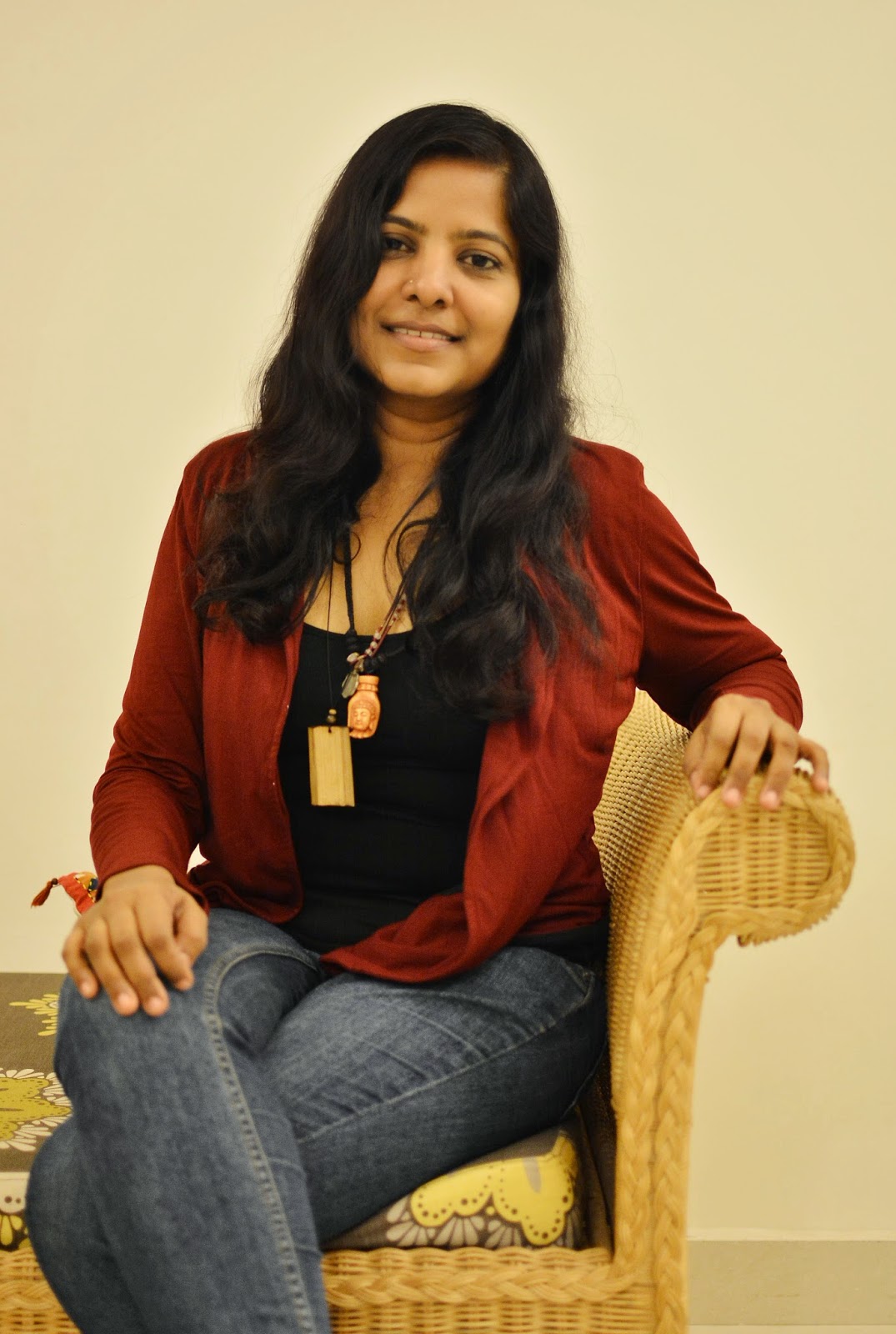
On a recent visit to Kochi, film-maker Leena Manimekalai talks about 'White Van stories', which documents the impact of the civil war on the Tamils as well as her other experiences

Photo of Leena Manimekalai by Ratheesh Sundaram; stills from the film

In July, 2013, when activist film-maker Leena Manimekalai went to Mullaitivu in Sri Lanka, she got a shock. “Every single house and tree was bullet-ridden and bombed,” she says. 

Leena met activist Jaya Lanka Ratnam, whose son, a militant, had been missing for years. And he is one of the thousands of militants who have disappeared. But there are also innocent Tamils who have also gone missing. The modus operandi was simple: the army or police would arrive, in a white van, and they would identify the people they want to interrogate, put them in the van and take them away. Very few returned.

So, it was no surprise that when Leena wanted to make a feature documentary on these disappearances, she called it 'White Van stories'. After meeting nearly 500 families, she focused on seven women who are constantly challenging the authorities to provide information about their loved ones. “All of them are willing to accept the fact that their men may have died, provided the bodies are returned to them,” she says. “Otherwise, they are unable to have a closure.”

Every family has suffered. Leena met a woman militant who lost her legs and half her face during the war between the Sri Lankan Army and the Liberation of Tamil Tigers Eelam in 2008-9. “Most ex-militants you meet has some bodily damage,” she says. “And every family has lost a family member either though death or disappearances.”

After the conclusion of the war, mass graves have been unearthed in Mannar and Vanni. “The Sri Lankan government keeps telling the world that that they were killing terrorists,” says Leena. “But to deal with terrorists, you did not need to kill 1.5 lakh Tamils.” That is the figure the people in Sri Lanka as well as the Bishop of Mannar, Rayappu Joseph, have given Leena. However, the official figure, according to the United Nations, is 40,000.

Former President Mahinda Rajapaksha said that during a war civilian deaths can happen. “But I believe that ethnic cleansing took place,” says Leena. “And I regard Rajapaksha as a war criminal. I also don't think the new government [under President Maithripala Sirisena] will solve the Tamil issue. Because ultra Sinhalese nationalism is feeding the nation's politics. The Buddhist monks want the land to be Buddhist. Religious fanaticism and nationalism can drug the people. ”

But not all of them. During her time in Sri Lanka, Leena stayed with several Sinhalese families. “They have fed and protected me,” she says. “I have met a lot of Sinhalese who are ashamed about what is happening. They want all the ethnic groups to come together and stay united.”

Incidentally, Leena had to do the shooting of her film undercover. In north and east Lanka, she had to cross checkposts every half a kilometre. “The entire area has been militarised,” she says. “The Army is everywhere.” Once when she was shooting inside a bombed-out ice-cream van she was spotted by a few soldiers. Leena was taken to a detention centre and interrogated for hours. “I felt scared,” she says. “But they refrained from using violence because I had an Indian passport.”

Leena has also made films on gender, caste, poetry, art therapy, the environment, indigenous tribes, and students politics.

Thanks to her work, the Chennai-based Leena has developed a reputation as a gutsy film-maker. Recently, she had come to Kochi to inaugurate the PJ Antony Memorial Foundation Street Play festival.

On the personal front, Leena came out as a bisexual in her second poetry collection, 'Ulagin Azhagiya Muthal Penn' (The First Beautiful Woman of the World). “There was huge censorship for that,” she says. “The Hindu People's Party wanted to burn the book. They went and filed a case in a police station. There was legal action against me. Ultra-left and ultra-right people came together and attacked me.”

Her recent poetry collection, 'Antharakanni', is about queer sexuality. “I wrote about Tamil folklore from the perspective of a queer,” she says. “But in India, people are not ready to accept lesbians and gays. Misogyny is common in every society. A misogynist is also homo and transgender-phobic.”

Despite the denunciations, her book has a good readership, especially among the women. “But there is a fear among them to express their support in public,” she says. “So they write secretly to me expressing their support. They are so thankful that somebody is giving an expression to their feelings. In India, our sexuality is suppressed because of social conditioning.”

But Leena overcame this conditioning when she began travelling abroad. In 2004, she went to attend the Women in the Director's Chair International Film and Video Festival at Chicago. “The festival director was a queer,” she says. “And there was a queer night. I saw dykes all round. And I realised it is all about pushing the boundaries.”

Today, Leena is committed to pushing the boundaries in her professional and personal life. 

(The New Indian Express, Kochi and Thiruvananthapuram) 

Thursday, March 05, 2015

Her Life Script

COLUMN: Spouse's Turn 

Aysha talks about life with the veteran scriptwriter John Paul

By Shevlin Sebastian

Photo by Melton Antony 

Aysha has never forgotten the night of June 14, 1976, the date of her marriage to the veteran scriptwriter John Paul. Inside their room, at John Paul's home at Kochi, her husband patiently took out the numerous pins that kept her hair bun propped up.

This gesture brought us close immediately,” she says. “It was an act of intimacy.”

Theirs was an arranged marriage. The families knew each other. And Aysha recalls with a smile that on his first visit to her home at Thiruvankulam village, in Ernakulam district, John Paul was wearing a red shirt and green trousers. “It was an unusual colour combination,” she says. “John Paul was slim, and had long hair. But I liked him.”

Two months after the marriage, they went for a trip to Haridwar and Rishikesh. Like most people, they had a dip in the holy Ganges. But the couple enjoyed their sojourn at Rishikesh the most. “We went for long walks in the hills,” says Aysha. “Sometimes we would stumble on to rock formations, where ponds had been formed. We would get down and lie in the water. It was a beautiful feeling.”

When they returned, John Paul got busy with his job at the Canara Bank. “But he told me very early, that art and culture are his passions,” says Aysha. “So every day after work, he would go for cultural activities and return home at 10 p.m.”

This routine went on for a few years. Then one day, in 1983, John Paul told Aysha that he was going to quit his bank job and become a scriptwriter in Mollywood. “I immediately accepted his decision, because I wanted him to fulfill his dreams,” says Aysha.

So devoted was Aysha to John Paul that sometimes when her husband would get up at 3 a.m. to write, Aysha would also awaken and make tea for him.

Interestingly, Aysha has never read a script that John Paul has written. But she has seen most of the movies that he has been involved in.

And her favourite is Bharatan's ‘Oru Minnaminunginte Nuruguvettam’. “I liked the acting of Nedumudi Venu and Saradha who play an ageing couple,” she says. “They would fight with each other over petty things, just like John Paul and I used to do. He had taken this incident from our life. Looking back, I realize that quarrelling is a form of love.”  

The fruit of their love is their daughter Jisha. But when their only child was six years old, Aysha suffered a medical crisis. One day, she vomited a large amount of blood, and carried on doing so. John Paul rushed his wife to a hospital in Thiruvananthapuram. But the doctors were unable to provide an accurate diagnosis. From there they flew to Chennai, to another hospital. But this also proved fruitless. So they went to the Christian Medical College and Hospital at Vellore. “And it was only there that a correct diagnosis was made,” says Aysha. “It was a problem with the membranes in my intestines.”

Interestingly, the fact that John Paul had left the bank worked to their benefit. As a scriptwriter he earned much more and could meet the medicinal expenses of Rs 30,000 a month. In those days, a bank employee's salary was Rs 1500 a month.

It took two years before Aysha was cured. During that period, she had to take 12 tablets a day and had to be taken to Vellore every three months.
Not surprisingly, Aysha was mentally shattered because of all that she underwent. “But my husband remained positive-minded throughout the ordeal and had a smile on his face,” she says. “This enabled me to get up the courage to face the problems.”

However, later, new problems developed. But this time it involved John Paul. In 2000, John Paul’s thyroid started malfunctioning and he ballooned to an unbelievable 193 kgs. “It became very difficult for him to walk,” says Aysha. “To go to the toilet, John Paul needed the help of two people. At night, he could not go to sleep. His sugar levels had soared to 300 [milligrams per deciliter, when the normal is 110]. There was a danger that he would slip into a coma. The doctor then told him that a risky nine-hour surgery had to be done to reduce the fat.”

Just before he was wheeled into the operating room, at a hospital in Kochi, an anxious Aysha kissed her husband on the cheek, in front of a crowd of relatives, friends and well-wishers. “This was the first time in public I showed physical affection,” she says. “I wanted to reassure him that he would get well. Later, John Paul told me that it gave him an emotional boost.”

The surgery went fine, and John Paul recovered. But today, he is still an imposing 140 kgs and experiences difficulty while moving around. Nevertheless, the couple looks peaceful at their home in Vennala, Kochi.

Asked for tips for a successful marriage, Aysha says, “Sometimes, young husbands will say about their wife, ‘She is not the girl that I wanted’. Has the husband ever asked his wife whether he is the spouse she wanted? So, you have to learn to adjust. You need patience, tolerance and acceptance. A marriage is not only about the sharing of bliss, but also the withstanding of tough times together.” 

(The New Indian Express, Kochi and Thiruvananthapuram)


Tuesday, March 03, 2015

The Backbone Of Life

M. Santhamani's installation, 'Backbone', at the Kochi Muziris Biennale, resembles the spinal cord, and is a metaphor of the presence of the backbone in lives and societies

By Shevlin Sebastian 

Photo by Ratheesh Sundaram 

In early 2010, the Bangalore-based artist, M. Santhamani, embarked on a boat journey, down the Ganges, along with two other women friends. She wanted to understand better the relation between nature and human beings. The trio began at Allahabad and, for the next three months, they travelled steadily, till they reached the Farakka Barrage in West Bengal, 800 kms away. On the way they keenly observed the life on the banks. And it was then that Santhamani had an epiphany.
  
Everything that we do on the banks of the Ganga is being enacted in our lives,” she says. “The journey gave an understanding of how people live and cope with this river, not only economically and physically, but mentally. Then I realised that the Ganga is a backbone of the country. So many rivers, like the Indus and Brahmaputra are the backbone of civilisations. Somewhere along, the concept of the backbone came up.”

So when she was invited to provide an art work for the Kochi Muziris Bienalle, Santhamani decided to make a backbone. At her studio in Bangalore, she used cinder and cement. Cinder is the waste material after coal is burnt. “It is hard and robust,” she says.

The end result, called 'Backbone', consists of 23 pieces. Each is shaped like a vertebrae, and has been placed on the ground, at the Aspinwall House, one after another, in the form of the spinal cord, with a length of 73 feet. “The actual spinal cord has 33 links,” says Santhamani. “But I did not want a too-obvious reference to the human backbone.”

In fact, when you look at the sculpture, you get a feeling of a flow, like that of the river, near the site. “Yes, I wanted to give a hint of the impact of water on Kerala's multiple cultures,” she says.

It is one of the more striking works at the Biennale. Many people come up and touch it. Some caress it. A few lean on it. A happy Santhamani says, “As an artist I don't want art to be only viewed. I want it to be part of your tactile experience.”

But not all agree. When a photo shoot is going on, with Santhamani leaning on a vertebrae, a volunteer, who does not realise that she is the artist, rushes up and admonishes her, “You are not supposed to touch it.” Santhamani smiles enigmatically.

Throughout her career, Santhamani has opted for unusual materials for her art, but her preoccupations have been charcoal and paper. “They come from different processes,” she says. “Wood is burnt to become charcoal, while the pulp of wood is grinded to make paper. Both are fragmented and fragile. So I felt that the material lends itself to talk about issues like global warming, which is leaving the planet in a fragile state.”

Her attraction to paper occurred when, in 1991, following her MA in painting from MS University in Baroda, she went to Glasgow and worked with Jacki Perry, one of Europe's foremost artist papermakers. When she returned she began sculpting things with paper.
  
I wanted to use delicate materials and talk about strengths,” she says. Santhamani placed photos, textiles, fibre and charcoal into the paper installations, which were at a height of 8 and 10 feet. “I just tried to push the scope of paper,” she says. “The Japanese can build a house with paper. So, we have no idea of how strong paper can be.”

Today, her work has been displayed at Miami, Paris, London, Tel Aviv and Singapore. Asked the difference in the audience reactions in the East and the West, Santhamani says, “The West embraces experimentation quickly. They give importance to what is new and want to look at the possibilities of whether they can take it further. We are slow in this aspect.” 

But the awareness of art is speeding up. At Fort Kochi, when she tells a tea-seller that she is an artist, he says, “Last year I could not make it to the Bienalle, but this year I want to make sure I see all the art works.” 

(Sunday Magazine, The New Indian Express, South India and Delhi) 
Monday, March 02, 2015

It's all About the Honey

Aleyamma Siby is the only woman bee-keeper in Kerala. Recently, she won the Stephen Memorial Award for the best bee-keeper

By Shevlin Sebastian

Photo by Ratheesh Sundaram

It is 9 p.m. Outside their house at Panathady in Kasaragod district in Kerala, Aleyamma and her husband Siby are hurriedly placing bee hives inside a van. Later, they climb in, and the van sets out towards the Coorg district in Karnataka, which is only 30 kms away. Once they reach there, they quickly place the hives, in 3 feet high stands, below trees, at a distance of three metres. “We have to do this before the sun comes up,” says Aleyamma. “Because, at sunbreak, the bees would want to come out in search of nectar and pollen. And if we keep the hives shut they will die of asphyxiation.”

Aleyamma is a breeder who practices migratory beekeeping. Once the honey is harvested at all the hives placed near her home, during the months of January to March, she moves off to Coorg and does bee farming there. “Somehow, the quality of the honey is far better,” she says.

But there is a reason for that. In Kerala, the major source of nectar is from the leaves of the rubber tree. “This is called unifloral honey,” says Dr. Stephen Devanesan, Principal Scientist, All India Coordinated Research Project on Honeybees and Pollinators, Kerala Agricultural University. “But in Coorg, the hives are placed in forests where there is diverse flora. So, the quality of this multi-floral honey is much better.”

However, the collection of honey is not an easy process. First the bees have to be warded off, using smoke. Then the honeycombs are removed from the hive. With the help of a honey extractor, the honey is taken out from the cells and stored in containers. All this has to happen in less than an hour, before the bees start stinging the person.

In the beginning the stings used to pain a lot and there would be a swelling,” says Aleyamma. “But now, although we get pain, there is no swelling. This is my bread and butter, so I have learnt to tolerate the aches.”

The biggest problem with honey is that it crystallises and ferments. To avoid this, Aleyammauses the double-boiling method. In this technique, she pours water into a large container. Then she places a smaller bowl, which contains honey, inside it, resting on three bricks. The bottom container is heated, so that the temperature inside the smaller bowl reaches 45 degrees centigrade. 

Then the honey is taken out, and put through a sieve, to get rid of wax particles, dust and pollen. Following this, it is reheated to 65 degrees centigrade for about 10 minutes. “After the honey cools, it is filtered,” says Aleyamma. “Once this is done, the honey will last for years, without going bad.”

Interestingly, Aleyamma is the only woman bee keeper in Kerala. Last year, she produced 40 tonnes, thanks to the 5000 colonies of Indian and Italian bees that she has.

And thanks to this high productivity, Aleyamma was recently awarded the Stephen Memorial Award for the best bee keeper of 2014 by the State Agriculture Minister KP Mohanan. This award has been instituted by the Federation of Indigenous Apiculturists.

To get a high productivity, Aleyamma depends a lot on the Tamil workers, who are experts at bee collection. “They are sincere, hard-working and not afraid of being stung,” she says.

Aleyamma also credits her success to a workshop which she attended. This was conducted by Devanesan, along with Dr. K. Prathapan, Director of the State Horticulture Mission. Says Devanesan: “I have imparted training to Aleyamma and other breeders on how to maintain the health of the bees, manage colonies, and do high-tech apiculture. Today, they are all doing well.”

Like most good things in life, Aleyamma came to bee-breeding by accident. When she got married and went to stay at her in-laws home in Thodupuzha, she saw bee hives for the first time in the backyard. In the mid-1990s, she and Siby decided to move to north Kerala to improve their economic prospects. They tried pepper farming and rubber cultivation. “It did not do well,” she says. “That was when I thought about bee farming. And now, here I am, the only woman in Kerala doing this work.” 

(Sunday Magazine, The New Indian Express, South India and Delhi) 

Sunday, March 01, 2015

The Enduring Superstar

Colleagues in Mollywood talk about their experiences of working with Mammooty

By Shevlin Sebastian

During the shoot of the Malayalam thriller, 'Munnariyippu', young actress Aparna Gopinath was on a fast. When superstar Mammooty came to know about it, one day, after lunch, he placed his hand under Aparna's nose and said, 'Chicken'. “Then he gave a hearty laugh because he knows I am a foodie,” says Aparna. “Mammooty Sir is a cool guy. He has the heart of a 18-year-old.”

He is also an intelligent person. “I call him a walking and talking encyclopaedia,” says Aparna. “You can discuss any subject with him. He has this knack of learning continuously. I am sure all the world knows that he is a gadget freak. He is always updating his devices.”

The main reason for his success in Mollywood is his fearlessness to go to the next level. “So, he takes on all sorts of roles,” says Aparna. "Sometimes, the films do well, and, sometimes, they don't. Most of us are scared to try experimental roles. We feel that if we take a risk, we might not last in the industry. But Mammooty Sir went beyond that thinking very early in his career.”

Asked the reasons for his enduring popularity, Aparna says, “He always puts in an immense amount of hard work for every role that he plays.”

In 'Munnariyippu', in which he plays a prisoner, there were many discussions with the director Venu, scriptwriter Unni and Aparna, who plays a freelance journalist, to understand the motivations of the character.

Mammooty Sir has the capability of looking at a film from the point of view of the audience, the actor as well as the camera,” says Aparna. “To be able to have a three-pronged point of view has enabled him to remain on top.”

The actor-director Joy Mathew agrees. “Mammooty knows where the camera is all the time,” he says. “He knows everything on the technical side. The type of lenses that are used: wide-angle, zoom, and high speed. And he knows where to stand and give his dialogues.”

When Joy was doing a fight sequence with Mammooty in the film, 'Rajadhi Raja', it was the superstar who showed Joy how to block a hit and shift the gun from one hand to the other. “You can clear any doubt with him,” says Joy. “In fact, he feels happy to do so. And this is not only about acting. If you want to know the meaning of some Malayalam word, or discuss art, literature or politics, he is ready to do so.”

In essence, Joy says, Mammooty has a heart. “Whenever he has home-made food, he will always invite people to share it with him,” says Joy. “It is a sign of humanity. You can share your liquor with friends, but the sharing of food is rare.”

However, like most people, Mammooty has lapses of temper. But Joy does not get upset by it. “An artist is always disturbed,” says Joy. “All good artistes are like that. Take the case of John Abraham [the late Malayalam film director], Picasso or Vincent Van Gogh. It is because of inner disturbances that great art and acting are born.”

Asked why Mammooty has been able to remain on top for three decades, Joy says, “You have to be committed if you want to do well in your profession. And Mammooty is very committed. He is punctual on the sets and can shoot till 3 a.m., without voicing any complaint. His hunger and passion for acting has remained undimmed, despite so many years of success. He told me one day, 'Why don't you write and direct a film for me?'”

Not many people know that Mammooty has given opportunities to many writers, as well as associate directors, to become directors. “Director Lal Jose got his first break in 'Oru Maravathoor Kanavu' (1998) in which Mammooty was the hero,” says actor Jagadish, who has known the stalwart for three decades. “Aashiq Abu's first film, 'Daddy Cool', (2009) also had Mammooty as the hero. When he feels somebody has calibre, Mammooty will say, 'Why don't you direct? I will give you the dates.'

As he remains focused on his career, Mammooty keeps an eye on the other aspects of life. “He follows a careful diet,” says Jagadish. “Mammooty will avoid fried eggs. On rare occasions, he will have red meat.”

He is also religious. “On Fridays, whereever he is, no matter how hectic is the shooting, he will go to a nearby mosque to pray,” says Jagadish. “He keeps track of what is happening in the lives of his colleagues. When my children became doctors he complimented me. That is an admirable trait in him.”

Jagadish smiles and says, “He also has a hidden trait: he likes to drive very fast. But I would not call it rash driving.”

In the film, 'Inspector Balram', there was a car chase. Jagadish acted as the police driver Sudhakaran. But in one particular scene, Circle Inspector Balram, played by Mammooty, pushed Jagadish aside and took the driver's seat. They were chasing a man who had a bomb.

He drove with tremendous speed,” says Jagadish. “I was terrified. If you look at the scene, there is real fear on my face. I felt that at any moment we would have an accident.”

Asked whether the presence of Mohanlal has enabled Mammooty to remain on his toes, Jagadish agrees. “There is a healthy competition between them,” he says. “This has enabled Mammooty to remain in the race.”

But, despite a long and glorious career, Mammooty has a few regrets. “Once he told me that had he been a Bollywood actor he would have got worldwide fame and a far higher remuneration,” says Jagadish. “Instead, he is confined to a small industry in Kerala. When it comes to talent, both Mohanlal and himself could have shone in Bollywood, if they had been Hindi-speaking actors.” 

(This was an input for a cover story on enduring superstars in the Sunday magazine of the New Indian Express, South India and Delhi)


Thursday, February 26, 2015

One Hundred Years Of Joy


The Cochin Club celebrated its centenary recently. Today, with more than 250 members, it is still going strong

By Shevlin Sebastian 

Photos: The main Club house; a card game in progress; watchman Varghese Kulangara. Pics by Ratheesh Sundaram

It is a sunny and sultry February afternoon. In the library of the Cochin Club, a group of elderly women are playing cards. Thanks to the high wooden ceiling, there is a coolness inside. Asked how often they play cards, Susheela Johar says, “Eight days a week.”All the women break into laughter. But they have a fixed routine. They come at 2 p.m. And play till 6 p.m. On some days, they play rummy. On other days, it is bridge.

Most of them have been members for years. “In fact, I have been a member for 53 years,”says Beena Joseph. Mary Jose Mooken says, “I have been here for 45 years.”

On February 14, the club celebrated its centenary. During the festivities, there were cricket and football matches, a beer-drinking competition, a treasure hunt, and it ended at night with a concert by singer Usha Uthup, followed by a fireworks display and a sumptuous dinner.

For many years, of its history, the club was the exclusive preserve of the Europeans. So exclusive was the privilege that even Sir Robert Bristow, the chief engineer of the Cochin Port, was denied membership because his wife Gertrude was not fully British. Apparently, she had a Belgian Jewish strain in her ancestry. Humiliated by this rebuff, the Bristows set up the Lotus Club in mainland Ernakulam.

One living witness of the past is gate watchman Varghese Kulangara, 84. In 1940, Varghese had worked as a ballboy at the club. “My father, who worked at Aspinwall Company, died and I was given this job,” says Varghese. “There were nine ballboys. We were paid Rs 5 a month. Many times, we received tips also.”

However, a few years later, Varghese left and joined a company on Willingdon Island. After he retired, in 1990, he was re-hired as a watchman at the club.

Another long-time employee was head waiter Manu who passed away many years ago. But he had remembered the momentous day of August 14, 1947, vividly. Many members were present at midnight, in their black suits and ties, to listen to the radio. 

And when Prime Minister Jawaharlal Nehru said, “Long years ago, we made a tryst with destiny and now the time comes when we shall redeem our pledge, not wholly or in full measure, but very substantially,” everybody heard the speech in silence. “Soon, I saw [BS] Holloway Sir, the then president, shedding tears,” said Manu, as recollected by veteran member NK Shashi who added, “It was at that moment that the life of country club garden parties, with ladies in sweeping gowns and wide-rimmed hats, an array of domestic servants, and a pompous lifestyle came to an end.”

However, it was only in 1954 that Pixie Iyenger of Madura Coats became the first Indian to be admitted, followed by DK Mukherjee of James Finlay. The first Indian president was Justice Govindan Nair, who assumed the post in 1963.

Today, there are more than 250 members. And the children of these members have fond memories, too. “I felt that the entire three-and-a-half acres was my home,” says Diya Mathew, a mother of three. “We had at our disposal, a large playground with swings, see-saws and a slide, an expansive lawn, a library with great children's books and bearers that made the best lime soda.”

But what Diya liked the best was Christmas Day. “I have seen Santa emerge from the roof, arrive in a fancy car, an auto, a cycle rickshaw, and pulled by a horse,” she says. “But before our time, Santa was even more sophisticated. He once arrived by boat, and, hold your breath, even by helicopter!”

Hold your breath again, because the club has one celebrity who is a long-time member. She is none other than Usha Uthup. “I had stars in my eyes and a heart full of love the first time I entered the club, the great big happening place of Kerala, in 1969,” she says. “Everything about the club was magical. The walls of the clubs and the lawns have seen and nurtured so many relationships, so many joys and so many tragedies, so many glasses of alcohol, so many fights, tears, parties and amazing guests. The place is still magical to me.”

Yes, indeed, it is a magical place. There is a manicured lawn, a main club house, a children's playing area, an indoor badminton and squash court, two tennis courts, billiards tables, a well-stocked library, with books by Winston Churchill, Eric Newby and Agatha Christie, among many others, a Blue Room where parties take place, as well as a bistro where coffee, tea and snacks are served.

At the back, there are charming suites and deluxe rooms, with high ceilings and wooden floors, which are used by members and guests alike for overnight stays.

On the walls, there are paintings of the many landmark buildings of Fort Kochi, crests and coats of arms presented by visiting British and Commonwealth ships, as well as photographs of long-deceased members.

The Cochin Club is deserving case for inclusion in the list of Protected Heritage Monuments compiled by the Archaeological Survey of India,says Shashi.

But modernity is also calling. “We are the in process of making the club a specialty restaurant destination,”says President Abraham Tharakan. “So there will be a Pan-Asian fine dining restaurant, a tapas bar and a Swiss coffee shop.”

(The New Indian Express, Kochi and Thiruvananthapuram) 

Wednesday, February 25, 2015

Long-Distance Love


COLUMN: Spouse's Turn 

Sureka talks about life with the athlete Renjith Maheswari

By Shevlin Sebastian

Sureka photo by Ajesh Madhav

At an athletics training camp, at New Delhi, in 2005, triple jumper Renjith Maheswari approached pole vaulter VS Sureka and said, with a smile, “Do you know me?”

Sureka nodded and said, “Aren't you Renjith?”

In that camp, they were the only two Malayalis present, so, naturally, they became friendly.

In 2006, both were selected to represent India in the Asian Games at Doha. While there, they used to have their meals together at the Games Village, and saw all the competitions, sitting side by side. “It was at Doha that our feelings for each other became stronger,” says Sureka. “But when Renjith missed the bronze medal by 2 centimetres [to Kim Deok-Hyeon of South Korea], he teased me by saying he got distracted by moving around with me.” Incidentally, Sureka finished fifth in her event.

Later, during an Inter-State athletics competition at Bhopal, Renjith proposed marriage. Sureka accepted and, on September 21, 2006, she called her Chennai-based parents and informed them. “My parents did not say yes, because it was a love marriage,” says Sureka. “They said that since I had grown up in Chennai it would be difficult for me to adjust to somebody who came from Kottayam. On the other hand, Renjith's parents told him that I was a city girl and would find it hard to adjust to life in a small town.”

However, both stood firm, and the engagement took place on November 8, 2007. But it took another one-and-a-half years, because of various athletic competitions, for them to tie the knot. It took place on April 15, 2009, at Kottayam.

For Sureka her unforgettable moment happened a day before the marriage.  Sureka's family had rented a house. The couple were told they could not meet or have meals with each other before tying the knot. But, at night, Renjith called Sureka on the phone. Then he came to the back of the house, and gave a packet, which contained food, to Sureka, without anybody knowing.

Unfortunately, they could not go for a honeymoon. Instead, Renjith and Sureka had to attend a training camp at Patiala. “Even though we were married, according to camp rules, we had to stay separately,” she says.

And that has been the case all these years. The couple have rarely spent time together. Renjith is usually in Bangalore, while Sureka trains in Delhi. But the good news is that all this intense training has been bearing fruit. At the National Games, held at Thiruvanathapuram recently, both won gold medals in their respective events.

But Sureka's happiest moment occurred, when Renjith won the bronze medal at the 2010 Commonwealth Games in New Delhi. She was pregnant, and was at home in Chennai. So she watched the event on TV. Just before he left his room for the competition, Renjith called up Sureka. “I said, 'Go all out and do your best',” says Sureka. “And he did. He crossed 17 metres and set a new national record, too. So, I felt very happy for him. ”

And Renjith became ecstatic when Sureka gave birth to a daughter. “In fact, Renjith was crying when he held the baby in his arms,” says Sureka. Today, Jhiya is four-and-a-half-years-old and she stays with Sureka's parents in Chennai. “My daughter misses me a lot, but she is aware that I am away because of my training,” says Sureka. “She always tells me, 'Amma get a gold medal'.”

But Sureka admits that she does suffer from guilt, at times, because she is not a hands-on mother. “But when I see how nicely my dad and mom are taking care of her, I feel glad,” she says. The one drawback is that both Renjith and Sureka are unable to be strict with their daughter, since they see her so rarely. “And my parents are equally soft with her,” says Sureka. “So, in the end, nobody is strict with Jhiya. I feel a bit worried about this, because she might get spoiled.”

When Renjith and Sureka are in Chennai together, they will have breakfast at home, before they spend the entire day outside, along with Jhiya, usually in the malls, watching films and eating outside. “We tend to reach home late,” says Sureka.

Asked to list her husband's plus points, Sureka says, “Renjith is very loving. If we have a fight, within a day he will say sorry and make up. He is very close to me and our daughter. He will call me three to four times a day to keep track of what I am doing. So I don't miss him much, because we are always talking on the phone.”

Renjith is also very religious-minded. “Every morning and evening, he spends one hour in prayer, reciting shlokas, alone in a room,” says Sureka. “And whenever he gets time he goes to pray at a nearby temple.”

As for his negative attributes, Sureka says that Renjith can get angry all of a sudden. And it may be over trivial matters. “He is also very frank and says things straight to the face,” she says. “That can upset a few people. But I don't have any problems with that. I am very much in love with Renjith, and feel very happy when I am with him.”

As for tips for a successful marriage, Sureka says, “Don't argue with your spouse. Because then both will get angry and it will lead to a fight. But the best way is to closely observe a marriage which is doing well.”

(The New Indian Express, Kochi and Thiruvananthapuram)  

Monday, February 23, 2015

Cooking up a storm in Macau


The Kerala-origin chef, Justin Paul, of the Golden Peacock, was instrumental for it to get the first Michelin star for Indian Restaurants in Asia

By Shevlin Sebastian

Photos: Justin Paul; the interior of the Golden Peacock; Assam Tea Chocolate, Sandalwood Icecream and Coconut Lychee Mousse

Chef Justin Paul had one the busiest times during the Christmas week last year. This was at the Golden Peacock restaurant of the Venetian Macau hotel. There were 650 people from a leading company of India who had come to stay for five days. Justin's brief: he had to provide top-class Indian food for all these people, with the help of his team. And, one day, he cooked up a storm: 15 starters, 75 dishes, and 40 desserts. “We were working day and night,” he says.

And thanks to the hard work of the entire team, the Golden Peacock has a high reputation. It is the first Indian restaurant in Asia to get a Michelin one-star rating (this is for the food only). “We initially got it in 2014 and won it again this year,” says Justin, with a smile.

Two Michelin inspectors came, like ordinary customers, and tasted most of the dishes. “It was only the next day that they revealed they are from Michelin,” says Justin “But they never gave us their names. They asked a lot of questions about the ingredients and other details, like where did we get the produce from.”

In fact, the restaurant gets its stuff from all over the world. Ducks are imported from France, tomato, cucumber and capsicum from Australia, lamb shanks from New Zealand, chicken from Brazil, okra from Thailand, edible flowers from Japan and cress, which is a form of edible herb, from Holland. “But all Indian spices are from Kochi,” says Justin.

One of the most popular dishes is the dal sonamor, which is a black lentil. “We soak the dal for six hours,” says Justin. “Then we will put this dal, mixed with tomato puree, fresh cream and butter, in a slowly heating tandoor overnight. The next morning, the dal is perfect.”

Some of the other dishes include the Kandari Murgh Tikka, which is skewered and roasted over a charcoal fire. It is an organic chicken boiled with baby beetroots and served with pomegranate. Then there is the Goa-style Scallop Ambot Tik, which is a pan-fried Scottish scallops, served on top of a spicy tomato jam.

A popular dish is the Dal Sath Nizam. This is made of seven types of lentils, pink onions, royal cumins and tomatoes. Desserts include the Assam Tea Chocolate, Sandalwood Ice Cream and Coconut Lychee Mousse.

To help Justin, he has a team from all over India. They include Mohammed Khalim (Lucknow), Raju Lankapalli (Hyderabad), Binu Baby (Thiruvananthapuram) Deepak Singh (Rishikesh), and Shyamal Kumar Prodhan (Kolkata).

Justin, on the other hand, grew up in Chalakudy in Kerala and had stints in the Leela in Mumbai and Goa, the Marriot in Goa, the Jashan, Hyatt Regency and the Veda restaurant in Hongkong, before he joined the Golden Peacock in June, 2007.

Incidentally, most of the patrons are from India, but they come mostly during the vacation months of April to July in north and south India. Many Chinese also come for the first time to try Indian food. “They tell me that they thought Indian food consisted of only gravy,” says Justin. “But when they experience our variety and style, with less spices, they like it a lot. We have many repeat customers.” And there are also foreigners from America, Japan, Spain, Germany and Britain.

One notable foreigner was former British footballer David Beckham, who is a business partner of the Venetian Macau. “David wanted small portions of several items,” says Justin.

So he was given the lamb rogan josh, mango prawn curry, chicken tikka masala, bhindi bhujiya, dal tadka, rice and nan in small bowls. “After the meal, he told me that he often eats Indian food in London, but this was the best that he had,” says Justin.

Another celebrity guest was Bollywood star Nana Patekar. “Nana loves cooking,” says Justin. “So he came into the kitchen and helped me in the cooking of the prawn curry. The people of Maharashtra like hot curries, so I had to put in a lot of spices.”

And the patrons are happy. The Bangalore-based Amit G says, “If you want Indian food this does not get better. Chef Justin Paul has more India here than some parts of India. Take it from me!” 

(Published in the Sunday Magazine, The New Indian Express, South India and Delhi)

Thursday, February 19, 2015

All Types Of Voices


Visitors from outside the state and the country talk about their impressions of the Kochi Muziris Biennale

By Shevlin Sebastian

Photos: Ajna Laville; Daniel and Monique Schuh; (from left) Elizabeth Sowmya, artist Gigi Scaria and Cilara Jacob. Pics by Ratheesh Sundaram

The slim and serious-looking Ajna Laville listens raptly to a media interview of Yuko Hasegawa, the chief curator of Tokyo’s Museum of Modern Art. Ajna is a research assistant, as well as a guide, at the Kochi Muziris Biennale. So when visitors come to the art festival, Ajna takes them around and ensures that they see all the sites. “There are 69 artists at Aspinwall House,” she says. “It takes about two-and-a-half hours to see all the works.”

Interestingly, Ajna never gets tired of seeing the exhibits. “Every time I get a different perspective, thanks to the people I accompany,” she says. “They find new interpretations which I had not observed earlier.”

Ajna, incidentally, is of mixed origin. Her Thiruvananthapuram-based father N. Rajendran is a Malayali, while her mother, Maryse, a Kathakali dancer, is from France.

Like her mother, Ajna is also interested in art. She has just completed a six-year course in the History of Art and Animation at the State Institute of Art in Urbino, Italy. Once the Biennale is over, on March 29, she is planning to go abroad for further studies in art.

Standing nearby are the French couple, Daniel and Monique Schuh, who have seen both editions. "The first time is always more exciting and amazing,” says Daniel, a retired physician. “However, in this edition, I have been disappointed with the many video installations, especially the one where an American speaks in English, without subtitles, for more than 10 minutes. It was a boring and uncreative performance.”

But yoga teacher Monique did like a few works. One was a video installation of artist Neha Choksi called 'Iceboat'. “It is a moving meditation on global warming, as well as a reflection on life itself,” says Monique. “I visualised the boat as our own life in which we need to row constantly in order to stay afloat and move forward. We are rowing to meet death which is inevitable at the end of one's life. It is almost like we are rowing steadily only to meet Death....or is there something beyond? The lady in the video was beautiful and looked like a queen.”  

The other work which Monique enjoyed was called ‘Bubblegum God’ by Goa-based artist Subodh Kerkar at the collateral show called ‘Janela’. Inspired by Moia sculptures from the Chilean Polynesian islands, it was created by Subodh using an old catamaran from Thiruvananthapuram and a bubblegum from the US. “It is a satirical depiction of the human race's journey, from the Inca valley to the Bubble Gum civilisation," says Monique.

Meanwhile, the Bangalore-based advertising professional Cilara Jacob sits on the ground at the back of Pepper House, and stares mesmerised at Gigi Scaria's 'Chronicle of the Shores Foretold'. This is a large stainless steel bell, which hangs on a grilled iron structure, and sprouts jets of water through various holes.

Art and nature have combined so well, with the Arabian Sea as the backdrop,” says Cilara. “And this continuous movement of water, through the holes in the bell, signifies life. Art is part of nature. The blending has been done so well by the artist.”

When she is informed that Gigi is present, she gets up and rushes to meet the artist. Then she takes an autograph and gets herself photographed with a smiling Gigi, by her friend Elizabeth Sowmya.

A freelance journalist, Elizabeth is also enjoying the Biennale. “Compared to the first, the scale is bigger this time,” says Elizabeth. “It has heightened my artistic sensibility. And the Aspinwall House is such a unique place to have an arts festival.”

The Mumbai-based Smriti Nevatia leans against a wall of the Pepper House and stares intensely at the bell. She is a curator of the film festival, 'Our Lives to Live', which is sponsored by the International Association of Women in Radio and Television.

Today is my fourth and last day,” she says. “Before I left for the airport I wanted to revisit the bell. I am enjoying the sight of the small boats, and the bigger ships passing by, and this bell on the edge of the water. It has made a deep impact on me. It makes you very appreciative of the kind of space this is. I have fallen in love with Pepper House. It is so beautiful. The way the works have brought alive the colonial and local histories is so stunning.”

Later, as she sips a cup of coffee, a smiling Smriti says, “This Biennale is fabulous. I have had an enriching time.” 

(The New Indian Express, Kochi and Thiruvananthapuram)