StatCounter

http://statcounter.com/p4130240/summary/?guest=1

Wednesday, June 02, 2010

Full steam ahead!


COLUMN: AT THE HELM

Vice Admiral Krishnan Nair Sushil of the Southern Command is focused on strengthening coastal security and providing the best training for Navy cadets all over India

By Shevlin Sebastian

“There is always a possibility of a terrorist attack from the sea, because it is the easiest way to gain access to a country,” says Vice Admiral Krishnan Nair Sushil, Flag Officer Commanding-in-Chief of the Southern Naval Command, Kochi. “Our fishing boats do not look any different from the Sri Lankan or Pakistani ones. We have the same culture and food habits. The Pakistani looks the same as an Indian and talks the same language.”

And they also have a common meeting-ground in the Middle East. “If a Pakistani wants to motivate an Indian -- to become a jihadi -- it becomes easier in the Gulf,” says Sushil.

Another drawback is that Indians are not at all security-conscious. Somebody will sweet-talk a fisherman to use a boat for 15 days. The fisherman thinks, ‘I need the money.’ “He is not aware that the boat may be used for a terrorist activity,” says Sushil. “These drawbacks are easily exploited.”

Nevertheless, after the 26/11 attacks on Mumbai, the central government has sanctioned a large budget to upgrade the facilities of the Coast Guard. “Soon, the Coast Guard’s reconnaissance aircraft and helicopters will be larger than the Air Force’s,” says Sushil.

But coastal security is a major problem. In Mumbai harbour, on any given day, there are 450 shipping vessels. “To keep track is a difficult task,” says Sushil. “We have requested the fisheries department to issue identity cards and do regular checks.”

The same thing is being done in Kerala. “The good news is that the fishermen in the state have become very aware,” says Sushil. If they observe anybody who looks suspicious, they report it immediately.

“This last level of security is vital in a place where there are thousands of fishing boats,” says Sushil. “We may have the surveillance, and the sophisticated aircraft, but it is not possible for a pilot to monitor every inch of the coast.”

On the other hand, a fisherman can say, “This guy is not from here.” Immediately, the Coast Guard can zero in on the right suspect. “That is the strength we have built upon,” says Sushil. “Whenever a fisherman reports something significant, we reward him. The fishing community feels good that they are being appreciated.”

Apart from coastal security, Sushil’s major responsibility is in running the training institutes in the Southern Command. They include the Naval Academy at Ezhimala, and the other establishments at Chilka, Lonavala, Mumbai, Vishakhapatnam, Coimbatore, and Jamnagar.

Asked how the cadets of today are different from the past, Sushil says, “They are much better informed.” In earlier times, when a major incident took place, cadets had no access to information.

“Today, a cadet can go to the Internet,” says Sushil. “He can read about how a submarine of the United States Navy has collided with another one. Photos, diagrams and analysis are easily available.”

Another significant difference is that the present-day cadets tend to opt for easier jobs. “So, there are fewer youngsters who want to work in submarines,” says Sushil, a submariner.

On the other hand, there are plenty of candidates for aviation because of the ‘glamour’ quotient and the perception that if they quit the Navy 20 years later, they can easily get another job as a commercial pilot.

“Among the youngsters there is a lot of calculation,” says Sushil. “But they work hard, and have their own way of doing things. They are better at taking decisions than we were at their age.”

But as a leader Sushil has been adept at taking decisions. Earlier, he had been the commander of two destroyers, ‘INS Ranvijay’ and ‘INS Delhi’.

So what are his tips on leadership? “Learn your job, be honest, and look after your men,” he says.

Sushil gives an example. At sea, he would regularly would walk down from the bridge and go to the hot engine room and talk to the man on duty. “He feels good that the captain is not staying put in the air-conditioned bridge,” says Sushil. “I respect my subordinates. I tell them, ‘You are an important member of the ship and I trust you.’ They always respond with enthusiasm.”

In his spare time, Sushil likes to play golf or go for a jog or do some reading. The book he is perusing now is, ‘Breaking Ranks: The True Story Behind the HMAS Voyager Scandal’ by Peter Cabban and David Salter. It is an account of the collision between an Australian aircraft carrier and a destroyer.

“The book talks about how the Navy tried to cover up the incident,” says Sushil. “It is a fascinating read.”

(The New Indian Express, Kochi)


Monday, May 31, 2010

'To see God you have to make an effort'


COLUMN: SPIRITUAL MATTERS

By Shevlin Sebastian

Every day, at 5.30 a.m., A.V. Raghavendra Bhatt, the chief priest of the Hanuman Kovil at Kochi begins praying. “Like any true Brahmin, I begin with the Gayatri Mantra,” he says.

Here are the lines from the most revered hymn in Hinduism:

Aum Bhoor Bhuwah Swaha,
Tat Savitur Varenyam
Bhargo Devasaya Dheemahi,
Dhiyo Yo Naha Prachodayat

(Oh God! Thou art the Giver of Life,
Remover of pain and sorrow,
The Bestower of happiness,
Oh! Creator of the Universe)

Following the Gayatri Mantra, which he repeats 24 times, Bhatt says the devotional hymn, ‘Om Namo Narayana’. This is followed by prayers to Lord Ram and his favourite, Lord Hanuman.

“There are 33 crore gods and goddesses,” says Bhatt. “But the one who does all the work is Lord Hanuman. If you ask Lord Hanuman for something, he fulfills your requests very quickly.”

Bhatt tells a story of how Lord Hanuman saved him. One day he was riding a bike in Palluruthy, near Kochi. He had to swerve suddenly to avoid a young girl. Bhatt fell from the bike and damaged his knee.

Taken to hospital, he was told that a surgery needed to be done. But he remembered the case of a devotee, who had a similar accident and after the surgery he was unable to bend his legs.

“I knew that if I could not fold my legs it would hamper my work as a melshanti (chief priest),” says Bhatt. “I felt very upset. I fervently prayed, ‘God, please show me the right way.’”

At that moment, a friend called up from Bangalore and mentioned the name of a famous naturopath in the city. Bhatt did not do the surgery. Instead, he went to Bangalore and met the doctor. He applied medicinal paste on the priest’s leg, told him to close his eyes, and straightened the limb with a swift jerk. Bhatt was healed.

“This showed that God cared for me,” says Bhatt. The grateful priest made a gold shield worth Rs 1 lakh and placed it on the idol of Lord Hanuman in Kochi.

When Bhatt closes his eyes, he sees a striking image of God, especially when he says the Gayatri Mantra. At the centre of the sun, Lord Vishnu, who is known as Savitrinarayana, is sitting cross-legged, with a slight smile on his lips.

“The body is enveloped in gold,” he says. Savitrinarayana wears gold earrings shaped like a crocodile. The lips are red as pomegranate and the teeth are covered with pomegranate seeds. At the corner of the eyes, it is light red in colour. The veins can be seen clearly. The shape of the eyes is like the stem of the lotus leaf.

Asked how man can get in touch with God, Bhatt says, “In the milk there is butter, but you cannot see it. To get butter you have to do various procedures. Similarly, to see God, you have to make a lot of effort. It is only then that God will allow you to have a glimpse of Him.”

(The New Indian Express, Kerala)


Wednesday, May 26, 2010

For the greater good of Cochin


COLUMN: AT THE HELM

M.C. Josephine, the chairperson of the Greater Cochin Development Authority, is happy with the work that she has done so far

By Shevlin Sebastian

“Repairing the Kaloor-Kadavantha road has been my biggest achievement,” says M.C. Josephine, the chairperson the Greater Cochin Development Authority. “It is now one of the finest roads in Kochi.”

Indeed, the 3.2 km long road is smooth and sweet and a pleasure to drive on. But for several years it was a nightmare, with potholes and stones strewn all over, making it unusable. In fact, a man died when he fell into a huge hole near Kathrikadavu bridge.

“Not many people know the history behind this mess,” says Josephine. It all began when the Kerala Water Authority (KWA) wanted to lay down pipes under the road, as part of a HUDCO project to supply drinking water to West Kochi in 2006.

The then Collector Mohammed Hanish, who was a member of the GCDA board, as well as the then chairman, T.K. Jose, agreed.

“But there was one mistake they made,” says Josephine. “They did not sign an agreement with the KWA asking them to restore the road to the original form before the digging began.”

When Josephine took over in April, 2007, the media had raised a hue and cry over the sorry state of the road. The High Court intervened. Local people and political parties staged protests. A man who lived on the road began using a horse to express his frustration.

When Josephine called the MD of KWA, T.P. Mohanlal, asking him to repair the road, he gave some complicated explanations about why the water authority could not foot the bill.

Eventually, the Local Administration Minister Pallolli Muhammad Kutty called a meeting, where Josephine, Mohanlal, the Fisheries Minister S. Sarma and several local MLAs were present.

It was decided that the cost of repairing the section of the road torn up for the laying of pipes would be split equally between KWA and GCDA. This worked out to be Rs 38 lakh each. “Thereafter, the GCDA spent Rs 2.5 crore to resurface the road,” says Josephine. The road became functional about a year ago.

The Jawaharlal Nehru international stadium at Kaloor will also become functioning soon. The GCDA is completing the roofing of the stadium.

“It is a Rs 10 lakh project,” she says. Now the turf is being re-laid, and 21,000 new seats have been put in. The stadium will receive a fresh coat of paint.

Josephine also discovered that numerous tenants of the GCDA were not paying rents on time. “Sometimes, the arrears went up to one year,” she says. Incidentally, the GCDA owns 19 shopping complexes in the city.

“I was disappointed by the tenants’ attitude,” says Josephine. “Because we are a government organisation, they feel they can get away without paying.”

So she put the squeeze on them. “We called the errant tenants to the office and asked them to pay up,” says Josephine. “When they did not, we issued eviction notices.”

Her clenched fist worked. The GCDA collected Rs 1.5 crore in arrears. “And people have begun paying the rent regularly,” she says.

She also moved decisively, when in the nearly five-acre land at Manapattiparambu Road, in the heart of the city, owned by the GCDA, there were a lot of homeless people who had set up makeshift tents and seemed intent on staying there permanently.

But Josephine ensured that a wall was put up all around the property, the people were evicted, and the GCDA is once again in control.

“A part of the area will be used for a multi-level car parking lot,” says Josephine. “In the rest of the plot, buildings will be made and rented out.”

The GCDA sometimes gives land away also. “For setting up the Vytilla Mobility Hub, 18 acres have been given to the state government,” says Josephine. Another 13 acres has been allotted for the Vytilla bus terminal. Five acres have been given to the Cochin Corporation at Mundamvelli, so that they can set up a sewage treatment plant.

Josephine is busy, but being the chairperson is not her only job. She is a die-hard Communist and works hard for the party.

On a recent Saturday, she inaugurated a strike of the KWA. Then she went to Panangad, 20 kms from Kochi , to attend an annual function of a Kundumbashree unit. Then Josephine was off to Kanjirapally to attend a family meet of party members.

So, on most days, Josephine arrives at the GCDA office in the afternoon. The staff has the same laid-back attitude. At 10.15 a.m., a few staffers trickle in, with an unhurried look on their faces. “But we have nearly finished all of our pending projects,” asserts Josephine.

The long-suffering public might not entirely agree with her.

(The New Indian Express, Kochi)


What a world of fun for everyone!


Veegaland, which completed ten years recently, is the most popular and successful amusement park in Kerala

By Shevlin Sebastian

Whenever Kochuouseph Chittillapilly, the managing director of V-Guard Industries went abroad for holidays with his family, he would frequently take his two sons to amusement parks in the USA, Europe, Singapore, and Malaysia.

“I became fascinated by the rides, the beauty of the surroundings, and the excellent service,” he says. Then one day the idea dawned on him to try something similar in Kerala, but he faced roadblocks.

“Banks were hesitant to provide the Rs 11 crore loan that I wanted,” he says. “They felt it would a failure.” But Kochuouseph had a gut feeling that it would succeed.

He spent four months traveling to Mumbai, Delhi, Kolkata and Hyderabad to study amusement parks. What he saw was not encouraging. “There was a clear lack of beauty and cleanliness,” says Kochuouseph. “The personal attention to customers was not up to the mark.” No wonder the parks were not doing well. He realised that if he wanted to succeed, he had to avoid the mistakes made by the other parks.

The location was decided by an impromptu purchase, several years ago, of a 10-acre plot of land on top of a hill in the sleepy village of Pallikara, 15 kms from the heart of Kochi. Once the plans for an amusement park became firmed up, he quietly bought plots from several owners nearby, till there was enough land to start a park.

In April, 2000, Kochuouseph plunged ahead with an Rs 22 crore investment. But the entrepreneur made things difficult for himself by pricing the tickets at Rs 250 per person. This meant that a family of four had to shell out Rs 1000, a steep amount for the middle-class in those days.

But Kochuouseph’s logic was simple: “When we go abroad, they charge $40 (Rs 2000) per person as entrance fees,” he says. “I had provided many facilities, and so I needed a good profit to meet the expenses.”

The gamble worked and the people came in droves. Sitting in his palatial bungalow beside National Highway 47 on the outskirts of Kochi, the businessman analyses the reason why. “There are many NRIs who enjoy these activities with their families when they come to Kerala for vacations,” he says.

The state is a consumer-rich society. More number of cars, televisions, washing machines, and air-conditioners are sold here than in other parts of India. “For high quality, people are willing to pay good money,” says Kochuouseph. “The visitors have come from all parts of Kerala to enjoy the facilities.”

On a recent Sunday, because of the summer vacations, there is a huge crowd present in front of the ticket counters. They range in age from toddlers to grandfathers. There is an air of anticipation and excitement.

Half an hour later, with ticket in hand, one enters the park. And the most striking impression is the astounding neatness. It is spotlessly clean. The grass has been trimmed neatly, the trees are aglow with flowers, and the cement paths are well maintained: no cracks or crevices.

And the numerous rides are mind-boggling: The Twin Flip Monster, the Sky Wheel, Dashing Cars, the Balloon Tower and Moon Walker. There is a Balarama Cave, a Musical Fountain cum Laser show and a Wonder Splash. There is a hang glider, as well as several pools, including the wave and family pool.

In the family pool, an unusual event took place. A paunchy middle-aged man felt that he had stepped on a stone. He reached under the water and pulled it up. It was a single tooth denture. The man beckoned a park employee standing at the side and told her to take it to the ‘Lost and Found’ section, near the entrance, but she was hesitant to carry it because it was a denture.

Suddenly, there was a yell. “That’s mine,” said 14-year-old Shashi. “I have been searching for it for the past two hours.” Shashi gave a gap-toothed smile. “It fell off when I dived into the pool,” he said, as he shook the man’s hand. “Thanks very much.”

The wave pool, which sends off waves at regular intervals, is very popular. One side is cordoned off for ladies and children. Unfortunately, there was quite a bit of gawking by the men. “It seems as if we are in a zoo,” a woman complained to a supervisor.

Kochuouseph is frank. “Yes, there are instances of eve-teasing and drunkenness,” he says. “But we have numerous security guards, most of whom are in plainclothes.”

They are well-trained and unobtrusive. The moment somebody starts misbehaving, they will be taken out quietly. “Sometimes, we don’t mind paying back the entrance fees to ensure that the person leaves the park,” says Kochuouseph. “We are determined that people should have a high quality experience.”

The park authorities ensure that by constantly striving to improve. “Work goes on 24 hours a day,” he says. “There is a group of employees who do the night shift, to keep the pools clean. The next morning the pools must be fresh and pure because a new group of customers will come in. We cannot say that because of yesterday’s rush we could not clean the place. They are paying Rs 500 per adult and Rs 380 for children on weekends and expect the best.”

Because of the company’s emphasis to provide top-class facilities, the people are coming in large numbers. “In 2009, we had 9.23 lakh visitors,” says B. Jayaraj, senior general manager. “But the crowds come during particular seasons.” The peak time is during the summer vacations for students, Vishu, Onam, and the Christmas holidays.

“The low season is during the monsoons,” says Jayaraj. When asked about the steep ticket prices, he says, “Nobody has complained to us about it. In fact, people are getting value for their money.”

And Kochuouseph is much respected for that. He remembers a recent dinner party that he attended where he was introduced to a student, Ajay, studying in Class four. When his mother told Ajay that Kochuouseph was the owner of Veegaland, the boy had a look of wonder on his face.

Soon, Ajay whispered something in his mother’s ears and she started laughing loudly. Apparently, the boy said, “Uncle is very lucky. He can go to Veegaland every day.”

Buoyed by the success of Veegaland, the company opened an Rs.120 crore amusement park in Bangalore, ‘Wonder La’ in 2006. Located 27 kms from the city, on the road to Mysore, it has also become successful.

Last year, the Wonder-La Holidays Private Limited, which runs Veegaland and Wonder-la, had a turnover of Rs 70 crore and a profit of Rs 12 crore.

“Our future plans include opening a park in Tamil Nadu, on the Chennai-Pondicherry route,” says Kochuouseph. “There are so many tourists from that state at Veegaland that we have become a recognised brand name among Tamilians. So, there is a strong possibility of the park being a success.”

(The New Indian Express, Chennai)


Saturday, May 22, 2010

‘God does everything for my good’


COLUMN: SPIRITUAL MATTERS

By Shevlin Sebastian

Every day, at 8.30 a.m., C.P. Jain, a former president of the Kerala Chamber of Commerce and Industry enters the puja room in his home at Kochi. There are idols of Lord Mahavira, Padmavathi, a goddess of the Jains, and Lord Venkateshwara of Tirupati. Apart from that, there are numerous photographs of different gods.

Jain begins by chanting the Navkar Mantra, the most important one in Jainism. Here are a few lines:

Namo Arihantanam: I bow down to Arihanta (Lords),
Namo Siddhanam: I bow down to Siddha (Liberated souls),
Namo Ayariyanam: I bow down to Acharya (Gurus),
Namo Uvajjhayanam: I bow down to Upadhyaya (A different category of gurus)

The Navkar Mantra has a total of nine lines and Jain repeats it 108 times. “I feel a mental peace and happiness, and a heightened concentration after I finish saying the mantra,” says Jain. Thereafter, he does some aratis and pujas, and says some personal prayers.

“I pray for joy, equanimity, love, world peace, and for my own prosperity,” he says. “I pray that my family should be happy, and my children should do well in their education.”

Jain’s elder daughter, Kanupriya, 23, is doing her MBA in Lancaster, UK, while Kriti, 21, is attending a course in Industrial Biotechnology at Anna University, Chennai.

Asked to prove that God exists, Jain gives an example. Kriti was about to sit for an exam in ‘Statistics and Probability’. In the previous test, she has done poorly.

Jain pleaded with his daughter to go and pray at a nearby Jain temple. Kriti did not go, but thanks to work -- Jain is a trader in newsprint -- he went to Chennai along with his wife.

One evening all three of them went to the temple and prayed for Kriti to do well. Later, after Kriti did her exams, she called her father and told him that she had secured the highest marks in the class: 90 per cent. “This proves to me that God exists,” says Jain.

When Jain closes his eyes to pray, he sees a statue of Lord Mahavira. “The Lord is sitting cross-legged, and his eyes are closed in a deep meditation,” says Jain. The idol, made of white marble, was located in a temple at Jaipur.

Jain’s father had taken him there when he was a child, and that image of Lord Mahavira became embedded in his mind. “It is a beautiful statue,” he says. “When you sit before it, you can feel the vibrations emanating from it.”

And yet, despite his devotion, Jain gets angry with God when bad events occur. “I ask God what is the mistake I have made?” says Jain. “I tell Him that I am praying every day to you. We are doing everything according to your dictates.”

Eventually, Jain puts the blame of bad events on karma – paying for negative actions done in a previous life – and develops a deeper understanding of God.

“I realise that whatever God does, it is for my good,” says Jain.

(The New Indian Express, Kerala)


Thursday, May 20, 2010

Moulding the future


COLUMN: AT THE HELM

In her sixth year as Principal of St. Teresa’s College, Sr. Christabelle talks about the various initiatives that she has taken up

By Shevlin Sebastian

Sr. Christabelle, the principal of St. Teresa’s College, Kochi, arrives at her office at 8.15 a.m. There are several teachers waiting to meet her. Some want permission to hold special programmes or seminars for their departments. Others want to discuss their concerns regarding certain students.

“A student is absent for a few days,” says Sr. Christabelle. “The teacher will contact the family, but if the student continues to stay away, I will intervene. Usually, I tell the parents to come and meet me. When that happens, the matter becomes much more serious.”

Students go through various problems at that age. “Some are not interested in a particular subject, or in studies, as a whole,” says Sr. Christabelle. “A few suffer from psychological problems. Others face harassment while travelling in buses.”

Sr. Christabelle finishes with the teachers’ queries by 10 a.m. Thereafter, there are visitors from outside. “Politicians come seeking admissions,” she says. “Officers will ask whether we can open an account in their banks.” Salesmen will showcase different products, like the latest computers and laptops.

People invite her to be a speaker at seminars and functions. Many representatives of associations like for the blind and the deaf and dumb ask for financial relief. “We try to help as much as we can,” she says.

Sr. Christabelle’s day finishes at 5.15 p.m. She attends a group prayer at the chapel from 5.30 to 6.30 p.m. Thereafter, dinner is served. After listening to the TV news at 7 p.m., the nuns will gather together and share their experiences, till 8 p.m. “This is the best part of the day,” says Sr. Christabelle.

As the others nuns go off to rest, Sr. Christabelle is back in her office at 8.30 p.m. “This is an important period for me,” the nun says. “I can work without any interruptions.”

There are reports that need to be sent to the Mahatma Gandhi University and the Department of Collegiate Education. “I do a lot of innovative planning during this time,” says Sr. Christabelle.

This is also the time when she replies to e-mails, and reads magazines like ‘Outlook’ and ‘India Today’, to keep abreast of what is happening in the country. She returns to the convent at 10.30 p.m.

In her sixth year as Principal, Sr. Christabelle has placed a lot of emphasis on doing seminars and projects. “Recently, the students did a project on women domestic workers,” says Sr. Christabelle. They studied the problems they faced, organised a seminar, and submitted a study to the University Grants Commission, which had provided a grant.

“This study can be very useful for different agencies like women’s organisations and the Cochin Corporation,” says Sr. Christabelle.

Some of the subjects that have been tackled include Aids, obesity and health issues among women, and problems of the elderly. As she talks, a group of teachers arrive to discuss with the principal their plans to hold the first Women’s Science Congress in August.

Thanks to Sr. Christabelle’s initiative, teachers now use Power Point presentations and LCD projectors in the classroom. “It leads to better communication and efficiency in teaching,” she says. “When you give a lecture, half the matter is not absorbed. Through Power Point, you can transmit information in a faster manner.”

Sr. Christabelle has also shifted the college timing from 9.a.m. to 8.30 a.m. So, classes finish at 2.15 p.m., and thereafter students can attend courses like functional English classes, graphics, animation and web designing.

“All these courses finish by 4 p.m.,” says Sr. Christabelle. Thereafter, financially-strapped students have the time to work as part-time salesgirls and give tuitions.

Asked how the students of today are different from the past, she says, “They are more individualistic and outgoing. They come up with a lot of new ideas. They have a better access to knowledge because of the Internet They are techno savvy and are adept at using the mobile, the computer and the lap top.”

But her complaint is that they often use these skills for shallow ends. “They spend long hours on chat, listening to music, or e-mailing,” the nun says. “They should use their time in a more productive manner.”

The college, with its strength of 2200 students and 125 staffers, is doing well. But Sr. Christabelle is upset by the moribund ways of Mahatma Gandhi University and the state government.

“Society and the world has changed rapidly, but our syllabus has remained the same,” she says. “The subjects have to be redefined. I have tried to get permission to start so many new courses over the years, but have never got a positive response.”

In an hour-long conversation, Sr. Christabelle looks depressed for the first time.

The silent plea in her eyes: ‘MG University, please wake up!’

(The New Indian Express, Kochi)


Sunday, May 16, 2010

Retaliation is the best way


Women in Kochi who have been sexually harassed by men take the offensive, with beneficial results

By Shevlin Sebastian

Meena Menon was five months pregnant. One day she boarded a bus at Panampilly Nagar. There were no seats. So she stood, holding the rod above her head. A young man got in from the front, came up to her, fondled her breasts and carried on walking towards the back. Meena raised a hue and cry. The passengers turned around to look. The panic-stricken boy jumped down from the running bus.

“He was stunned that I retaliated,” says Meena. “He expected me to remain quiet, like most women. I am sure he will think twice before attempting this again.”

Christina Joseph is a regular at the Novena prayers at the St. Antony’s Shrine at Kaloor. One Tuesday evening, she had joined her palms together, and raised it upwards.

At that moment, a man standing next to her took the opportunity to press her nipples. Christina shouted, “Why do you come to church and do these things?” The man just slunk away.

Latha Devan was coming out of a jewellery shop when a man, who was coming from the opposite side, groped her breasts. “Luckily I had my umbrella with me and gave a whack on his head,” says Latha. “He ran away as fast as he could.”

Increasingly, most women these days are fighting back. “Whenever we react, they flee,” says Latha. “They are cowards.”

Meena agrees. “When you react, the eve-teasers feel afraid,” she says.

However, despite these bold actions, whenever women venture out into public spaces, like in a bus or a train or a movie hall, they feel anxious.

“I am scared about how people are going to behave,” says Meena. “It is a degrading experience when men behave badly with you.”

Christina says she becomes doubly tense when she goes out with her teenage daughter, Anna. “I try to protect her as much as I can,” she says. So when they are leaving a theatre after a film, her husband, James, will walk in front, Anna will be in the middle and Christina will be at the back.

Christina says women need to take such precautions. “The big drawback in Kerala is that when a woman is harassed the public will remain silent,” she says. “They will only watch. So, you have to fight the battle on your own.”

She says that it is important that the people show support to harassed women. “It is only then that incidents like these will stop,” says Meena. “Those who are watching silently should remember that they have mothers and sisters at home.”

When asked for the reasons for this bad behaviour by men, Meena says, “They are sexually frustrated. These men have the misconception that women are crazy for sex. They believe that if they molest us, we will get excited the way they do.”

Incidentally, most of the men who have harassed her are 45 years and older. “I am sure they are married,” says Meena. “They probably do not have a good sexual relationship with their wives.

Apart from middle aged married men, there are the labourers, mostly from north India, who look at us with such unbridled lust, it is a horrible feeling.”

A cynical Christina says, “All men are like this. If James, my husband, were not educated and came from a good middle-class family he would have behaved in the same manner.”

So what is the expert’s view on man’s degrading treatment of women in Kerala?

Psychiatrist Dr S.D. Singh says that Kerala is a sexually repressive society. “Men get little chance to express their sexuality,” he says. “So, when women come close to them in public spaces or when they stand or sit next to each other in a bus or a train, they ventilate their sexuality by harassing the females.”

Interestingly, in the West, these public harassments occur very rarely. “There, the men are able to express their sexuality by going to parties and nightclubs,” says Singh. “There is no stigma in men and women kissing, hugging, and talking to each other, unlike it is here in Kerala.”

In western countries, if you physically appreciate a woman, who is a colleague or a neighbour, it is taken as a compliment, and the woman will say ‘thank you’. “Here, it will be defined as a ‘comment’ or a ‘pass’, and will not be accepted in a dignified way by the women,” he says.

So what is the way forward? Latha says that the police or NGO’s should hold awareness courses for men on how to behave in public with women.

“Co-education could be another way,” says Dr. Singh. “Men and women should be encouraged to interact often with each other. At the same time, women should be taught to defend themselves against men who cross social norms and behave badly.”

(Some names have been changed)


Thursday, May 13, 2010

‘Om is the sound of the universe’


COLUMN: SPIRITUAL MATTERS

By Shevlin Sebastian

When Gujarati businessman Rajeev Dholakia went to the Kedarnath shrine in September, 2007, he was struck by a powerful energy in the main shrine. “There were pilgrims who came with a lot of faith and devotion,” says Rajeev. “Probably, they brought in more zeal.”

Rajeev felt happy, peaceful, and calm, but the mood did not last for long. “The pujaris have become too money-minded,” he says. “In most of the well-known temples, it is all about how much money you can pay and the time in front of the deity will be allotted accordingly. I felt angry and frustrated.”

He also discovered that most devotees were casual about their faith. “Many had switched on their mobile phones during the aarati session so that their relatives in distant places could also hear it,” he says. “It devalued the spiritual experience.”

At Kochi, where he stays, Rajeev is not a regular visitor to temples. Instead, he prefers to pray, while driving the car or working in the office. “God is everywhere,” he says. Prayer, for him, is to keep murmuring the word, ‘Om’ all the time. “It is the sound of the universe,” he says.

He says that by chanting ‘Om’ his mind calms down. “Usually, the mind is always in a state of chaos, flitting from one thought to another,” he says.

However, in between, he reflects over profound philosophical questions. “I want to find out the purpose of my life,” says Rajeev. “What is happiness and salvation? Why have I come to this earth? Where do I go from here?”

When Rajeev was younger, he had fewer doubts. When he would close his eyes to pray, he would behold the image of Lord Shiva. “I used to see the blue body with the long hair, the snake coiled around the neck, and the water of the river Ganges sprouting from his head,” he says.

Rajeev says that his mother is a deep believer in Shiva and he imbibed that faith from her. But, nowadays, when he closes his eyes, he prefers to keep it blank. “However, sometimes, I see the image of ‘Ajja’ my spiritual guru, who died in 2007,” he says. “I am hoping to reach God through him.”

So, like most people, does Rajeev get angry with God when bad events occur? “No,” he says. “What you get is what you deserve. It is the result of your karma. So I don’t blame anything or anybody. But I do get angry with myself. I feel I have not done enough mediation. That is why bad events occur.”

Asked to prove that God exists, he smiles, and says, “It is like trying to explain why I was born in a particular Gujarati family in Kochi and not in Ahmedabad, or in the Ambani family? Why didn’t I have those choices? So, clearly, there is some force that makes these decisions. To me, God is this immense power in the universe. We live at His mercy.”

(The New Indian Express, Kerala)


Hot and spicy!


COLUMN: AT THE HELM

C.V. Jacob has been running the Synthite Group with great success for the past four decades

By Shevlin Sebastian

C.V. Jacob, the chairman and managing director of the Synthite Group arrives at his office at the very early hour of 8.30 a.m. This is in the village of Kadayiruppu, Kolencherry, 30 kilometres from Kochi.

His office is large and spacious. One wall is dominated by a glass-paned window through which you can see manicured lawns, smooth cement paths, and neatly painted buildings.

The Synthite Group is an Rs 500 crore company, employing 2000 people. It’s most successful business is spice oils and oleoresins. They are converted into liquid form and exported to more than 70 countries.

“Currently, Synthite contributes 50 per cent of India’s exports of spice oleoresins, and this is equivalent to 35 per cent of the world demand,” says Jacob. The company has won several national awards for outstanding export performance from the government of India.

The group has factories in Maradur (Tamil Nadu), Harihar (Karnataka), Khammam (Andhra Pradesh) and at Kolenchery, Pancode, and Calicut. They started Riveira Suites, the first apartment hotel of its kind in Kerala, and the five-star hotel, Ramada Lake Resort and Spa at Kochi.

One of the first things Jacob does when he arrives at the office is to check the raw material purchases, as well as the sales of finished products.

At 10 a.m. he goes out to oversee the reconstruction work of the government hospital nearby. The Synthite Group is spending Rs 80 lakhs for it. After that Jacob makes short visits to the Medical Mission hospital, run by the Malankara Orthodox Syrian Church, where he is an advisor, and the St Peter’s College where he has been the secretary for the past 18 years.

Jacob also steps into the family-run English medium senior secondary school, St. Peter’s. “There are 2100 students,” he says.

Once a week, Jacob goes to the office of the Cochin International Airport Limited (CIAL) at Nedumbassery, where he is a director of the board.

“Jacob oversaw the upgradation of the ten-year-old runway which had been in bad shape,” says Krishnadas Nair, the MD of CIAL. “The work was completed in just a few months.”

Meanwhile, at Synthite, Jacob concentrates on finance and purchases. “I have delegated a lot of the responsibility to my sons, Viju and Aju Jacob, and nephew, George Paul,” says Jacob, 77.

He now devotes quite a bit of time for social work. The CVJ Foundation helps those in need of money for cataract and heart surgery. They also provide scholarships for poor students as well as assistance to buy houses. There is an insurance scheme for the poor.

“We try to help the needy as much as we can,” says Jacob. The family displays this helpful attitude in their company also.

When a person becomes a permanent employee he is entitled to a motorcycle or a car, depending on the salary. Other perks include medical reimbursements, education and housing loans. “All workers are entitled to interest-free housing loans,” says Jacob.

The company also has a pension scheme for staff members.

Thanks to happy employees, the Synthite group has no union. Jacob says that many attempts were made to start one, but the workers resisted. “They are more attached to me,” he says, with a smile. As a result, the company has not lost a single working day to labour unrest in the past 36 years.

Jacob says that he has also not experienced any problems, either with the LDF or UDF governments. “As for the Centre, they have rendered timely help,” says Jacob. Five years after he embarked on the spice oleoresins business, the central government began a cash assistance programme to help the industry.

Each company received a payment of 10 per cent of the turnover. “I used the money to invest in research and development,” says Jacob. “As a result, we were able to reach international standards in terms of quality and output.”

In 1973, Jacob had a tie-up with J. Manheimer Inc, an American company. “They provided crucial technical know-how to us and agreed to sell our products in the United States,” says Jacob. Thanks to the many orders given by Manheimer, the sales boomed and there was no looking back.

Asked for tips to run a successful business, Jacob says, “You must be sincere and dedicated to the company. It is important to have proper working systems in place. And you should keep an eye on what is happening. Hands-on management is the best way. If we work hard, our employees will also work hard. Lastly, and most important, one must be honest in all financial dealings, be it with the bank or with clients.”

(The New Indian Express, Kochi)


Tuesday, May 11, 2010

Heart-felt observations


US-based cardiologist Dr. Johnson K. Zacharias talks about the latest trends in the field, as well as the impact of medical tourism in India

By Shevlin Sebastian

One day, US-based cardiologist Dr. Johnson K. Zacharias, who lives in Port Huron, near Detroit, received a call from his nephew in Florida. The youngster said, “My dad is having gas pains, so I am going to the drug store to get some medicines.”

Zacharias said, “Please turn around immediately and take your father to the hospital. What is gas pains could be the symptoms of a heart attack.” At the hospital, a cardiogram showed evidence of blockage. Timely medications saved the life of his brother-in-law.

On his way to India, last month, Zacharias stopped over at Dubai. There he came across another case, Ranjan (name changed), who had been suffering from gas pains. Unfortunately, the family, unaware that he had a heart attack, did not take him to the hospital. Two days later Ranjan collapsed and died at home.

“When you think you are having a gas pain, which may be in the lower end of the sternum or upper stomach, always have it checked,” he says. “It could be a heart attack.”

Zacharias says Indians are predisposed towards heart attacks. “Indians have low levels of High Density Lipoprotein, which is regarded as a good cholesterol,” he says. “They have smaller blood vessels in the heart, as compared to Westerners.”

Indians also tend to suffer from diabetes, obesity, and stress. “All these factors raise the chances of a heart attack,” he says.

Zacharias has been running a successful heart clinic staffed with Indian doctors for several years. “Indian physicians are well respected in the United States,” he says.

This is one reason why medical tourism in India is booming. More and more Americans are coming to the country to do open-heart, knee, cosmetic, and dental surgery.

According to a study conducted by the Confederation of Indian Industry and McKinsey consultants, 1,50,000 foreigners visited India for treatment, last year, with the growth pegged at 15 per cent a year. India could earn more than $1 billion annually.

“Private hospitals in India have some of the most up-to-date facilities,” says Zacharias. But the biggest plus is the cheaper costs of surgery.

“An open-heart surgery in the US costs anywhere between $30,000 and $50,000,” he says. “In India it can be done for as low as $10,000.”

But there are inconveniences. “If I have chest pain and need a bypass surgery I will be scared to travel 15 hours in a plane,” he says. “Travel, itself, is a big strain.”

The other drawback is that when you go through a major operation abroad, you cannot have the family with you. “After surgery, a patient needs the support of friends and relatives,” says Zacharias. “But when you come to India, it is just a business transaction.”

Zacharias has been taken aback by the ‘big business’ attitude of most hospitals. “In India the authorities first check whether the patient can pay the bills,” he says. “This is a disappointing attitude. There should be a social conscience.”

In the West there is no discrimination between a millionaire and a poor person. “They get the same treatment,” he says. The hospital authorities worry about the payment much later. Their first and immediate priority is to save the human life. Whatever needs to be done, will be done.

“Indians have to learn to keep the balance between ethics and profits,” says Zacharias.

Asked about the new trends in cardiology, he says, “Research has been done to develop medications to thin the blood.” When the clogged blood vessels are dilated and a stent is put, there is a tendency for that area to get blocked again.

“To prevent that happening patients are given blood thinners,” he says. Zacharias usually prescribes a tablet called Plavix, along with aspirin.

Meanwhile, thanks to international seminars and information available on the Internet, cardiologists in Kerala are also up to date, says Zacharias, who was on a brief visit to the state.

Belonging to the Kuttanperoor family, of Chanagancherry, he did his MBBS from Trivandrum Medical College and worked briefly as a teacher of physiology at Kottayam Medical College.

After further stints in different parts of Kerala, he got an opening as an intern in the Detroit General Hospital in 1968. Later, he did a two-year cardiology fellowship, and settled down in the US. This 42-year-long stay has made Zacharias unprepared for life in India.

On a recent holiday to Munnar, this expert of the heart suffered from palpitations. “I was sitting in the front, near the driver,” says Zacharias. “But our car was barely missing other cars and buses on the road. My heart started beating fast. I had no option but to go to the back seat and avoid seeing these narrow misses. At times, Kerala can be hard on the heart.”

(The New Indian Express, Kochi)


Monday, May 10, 2010

A new musical route to Jesus Christ


For the first time in the Catholic church, a priest sings Christian hymns based on the ragas in Carnatic music, much to the joy of the parishioners

Photo: Fr. Joseph Thattarassery (centre) singing Carnatic bhajans

By Shevlin Sebastian

When Fr. Joseph Thattarassery was appointed as the parish priest of St. Joseph’s Church in Tripunithara, 8 kms from Kochi, in 2002, it changed his life. A mild interest in Carnatic music became a passion.

“There are 130 temples in Tripunithara,” he says. In most of the major temples, like Sree Poornathreseya and Chakkamkulangara Siva Temple, there are regular Carnatic sangeet kacheris or concerts.

“In the beginning I could not understand the meaning of the ragas,” says Fr. Joseph.

The priest had studied the basics during a one-year course at the St. Joseph’s Minor Seminary in Kochi. So he got himself a teacher, P.D. Sygal, and started learning the ragas for three hours a day.

“Soon, what I was struggling to learn, I could see its excellence in concerts,” he says. It was during a concert by the brilliant Carnatic vocalist T.M. Krishna that an inspired Fr. Joseph got the idea of starting something similar in the church. So, he took some ragas, and changed the lyrics to suit Christian themes.

When Fr. Joseph proposed the idea to the parishioners, the initial reaction was negative. In fact some people got angry. In one instance, they objected to the word ‘saranam’ in one of the hymns.

“They asked me why I was using a Hindu word,” he says. They had linked it to the Lord Ayyappa chant, ‘Swami Saranam, Ayyappa Saranam.’ But Fr. Joseph told them that the word ‘Saranam’ is a Malayalam word and means hope. “It does not belong to any religion,” he said. “It is part of a language. I had to clear their misconceptions.”

Despite the misgivings, Fr. Joseph began a bhajan recital at 4 a.m., every Friday, with a group of singers. And slowly the parishioners were drawn in by the great power of Carnatic music.

“When you listen to the Gregorian chants (Western liturgical music), you feel the Christianness in the song,” says Fr. Joseph. “But when you listen to a Carnatic song with Christian lyrics, you get the feeling that Jesus Christ belongs to our land.”

Undoubtedly, when Fr. Joseph sings, there is a magnetism in the music and the lines:

Divyakarunyam Bhaje
(We adore you Holy Eucharist)

Paramakarunyam Bhaje
(We adore you Supreme Mercy of God)

Sree Yesu Devam Bhaje
(Jesus the redeemer we adore you)

Sree Christu Devam Bhaje
(Christ, the Holy Anointed One, we adore you)

So, did the Church object to this? “On the contrary, I received whole-hearted support,” says Fr. Joseph. The late Archbishop Daniel Acharuparambil, the leader of the Latin Catholics, had won a gold medal in Indian philosophy from the Benaras Hindu University. “So he understood what I was trying to do,” says the priest.

Interestingly, there were a lot of Brahmins who came to listen to the recital. Among them was a man called Raman. “He used to come without fail every week,” says Fr. Joseph. However, after a few months, Raman moved to Thiruvananthapuram, 200 kms away.

Nevertheless, every Thursday evening he would return to Tripunithara, stay at a hotel and attend the 4 a.m. bhajan the next day. “Raman paid the expenses of all the singers,” says Fr. Joseph. “I can never forget him.”

After five years Fr. Joseph was transferred to the Our Lady of Perpetual Help church at Ochanthuruth, in the Vypeen Islands, near Kochi. Quickly he started a 12-person choir for bhajan singing, which included three Hindus: Unnikrishnan on the mridangam, Lalu on the tabla, and Devadas on the flute.

“It has been an amazing experience for me,” says Devadas. “To play Carnatic music inside a church before dawn has brought me nearer to God. I feel an inner peace.”

Jacqueline Patrick, the vocalist, says, “You experience a deeper closeness to God when you sing a hymn, with Carnatic, rather than with Western music.”

The bhajan-singing is slowly gaining acceptance. During this year’s Maundy Thursday Mass, Fr. Joseph sang the ‘Raga Pahadi’ and it was well received. Fr. Joseph also goes back, on the first Friday of every month, to his old parish to do the 4 a.m. bhajan. And he continues an intensive training from an A-Top artist of All India Radio, N.P. Ramaswamy.

Meanwhile, the troupe is getting calls from different places in Kerala to perform. Recently, they went to an old woman’s home at the nearby town of Pallipuram to give a recital. The audience comprised 45 women, who had been abandoned by their families.

For one and a half hours the troupe sang songs in praise of God. Near the end, they launched into the Darbarai Kanada raga. This difficult raga, if sung with passion, has the potential to create a powerful emotional reaction.

“We started singing very loudly,” says Fr. Joseph. After a few minutes, all the women stood up, ranging in age from 70 to 90, and with their arms upraised, they began crying bitterly. “The old women were shedding tears of sorrow, because their children did not want them,” says Fr. Joseph. “Seeing them we also started to cry.”

But after the performance Fr. Joseph looked at the positive side. “I was glad that I could bring them some relief by singing such a beautiful raga,” he says. “Our song passed a message to these forlorn women: ‘If no human being, especially those closest to you, offers support, remember, God is always there for you.’”

(The New Indian Express, Chennai)


Thursday, May 06, 2010

Working for the people


COLUMN: AT THE HELM

The popular MLA from Tripunithara, K. Babu enjoys the interaction with his voters, and tries to render help as often as he can

By Shevlin Sebastian

At 8 a.m., on April 27, the day of the nation-wide hartal called by the Left parties, K. Babu, MLA, has visitors at his home in Tripunithara. Among them is young Rajesh, a Kashmir-based jawan of the Indian Army, who has come home for a vacation. But his ticket is wait-listed for his return journey on April 30.

Babu writes a recommendation letter but warns Rajesh, good-humouredly, “There are four MPs who have their base in Kochi. So, if my request is blocked, call me up.”

Every morning, about 100 people come to his house with various complaints. “Some need a letter of introduction for a ration card,” says Babu. “Some want a recommendation for a job, while others want a marriage certificate to be attested.”

Usually by 9 a.m. Babu leaves the house. On Sunday, April 25, this is what his programme looked like: Babu first headed for the Anjumana temple at Edapally for a function.

From there he went to Angamaly where he attended an event at a jewellery store, the 60th birthday celebrations of a man, and the First Holy Communion mass for a child. Thereafter, he drove to Thrikakkara and Kakkanad for several weddings. It was at 2.40 p.m. when he reached home and had his lunch.

Within half an hour he was on the road. This time it was to pay condolence calls at Vytilla and Kaloor. He then proceeded to the MLA guest house where there was a conciliation meeting between the workers and the management of Apollo Tyres. Babu is the union president.

Thereafter, Babu went for a programme for women at Thrikkakara. He then attended a function at St. Jude’s church at Thammanam followed by the Building and Roadworkers Federation meeting at Rajendra Maidan. The time was at 6 p.m.

At Cannon Shed Road, there was another meeting. Then Babu attended resident association functions at Masjid Road, P.J. Antony Road and Thoppil Road. “By this time it was 8.45 p.m.,” says Babu. He then rushed to the IMA hall to attend a wedding reception. When Babu reached home it was 9.30 p.m.

“I do this because I want to keep in touch with the people, during happy and sad moments,” says Babu. “I enjoy the interaction. The people are also glad to see me.”

Babu has been an MLA for the past 19 years. So what have been his achievements?

He rattles them off: “The biggest achievement was the setting up of the Choondi drinking water project,” he says. “It has solved the water problems of Tripunithara.” A faculty building has come up at the RLV College of Music. At Vytilla, a Kerala State Electricity Board substation has been put up. “This has reduced the number of power cuts in the area,” he says.

A taluk hospital, a fire station, and a bridge have also been constructed at Tripunithara, apart from a 350-bed hospital at Ayurveda College and a hospital at Thrikakkara.

But a frank Babu admits that the big failure has been the non-completion of the Edapally rail overbridge. As a result, thousands of people are inconvenienced every day because of long waits at the railway crossing.

“The overbridge was to have been completed in 2007,” he says. “I blame the contractor for this.” The contract has been re-tendered and it will take another one and a half years before the work is complete.

Babu talks about other problems. “In Tripunithara, there is a lot of traffic congestion,” he says. “We need to build a bypass, but land acquisition is a problem. The Kakkanad-Palarivattom road is always choked with traffic. We need to make a parallel road. Flyovers will have to come up at Palarivattom, Edapally and Vytilla.”

From his enthusiastic talk, it is clear that he enjoys being a politician but he admits that he has paid a high price for it. “I have sacrificed my family life,” he says. “I have rarely gone out with them anywhere. I work 365 days a year.”

But this hard work is paying dividends. Says long-time resident of Tripunithara, Antony Maleth: “Babu has done so many good works for the constituency. Even though he is a MLA, he mingles easily with the people, and never disappoints anybody who comes to him for help.”

This will make Babu happy. Exactly a year later is the Assembly elections, but with the Congress set to sweep the elections, K. Babu looks all set to complete a quarter of a century as the MLA from Tripunithara.

(The New Indian Express, Kochi)


Wednesday, May 05, 2010

A bright beginning


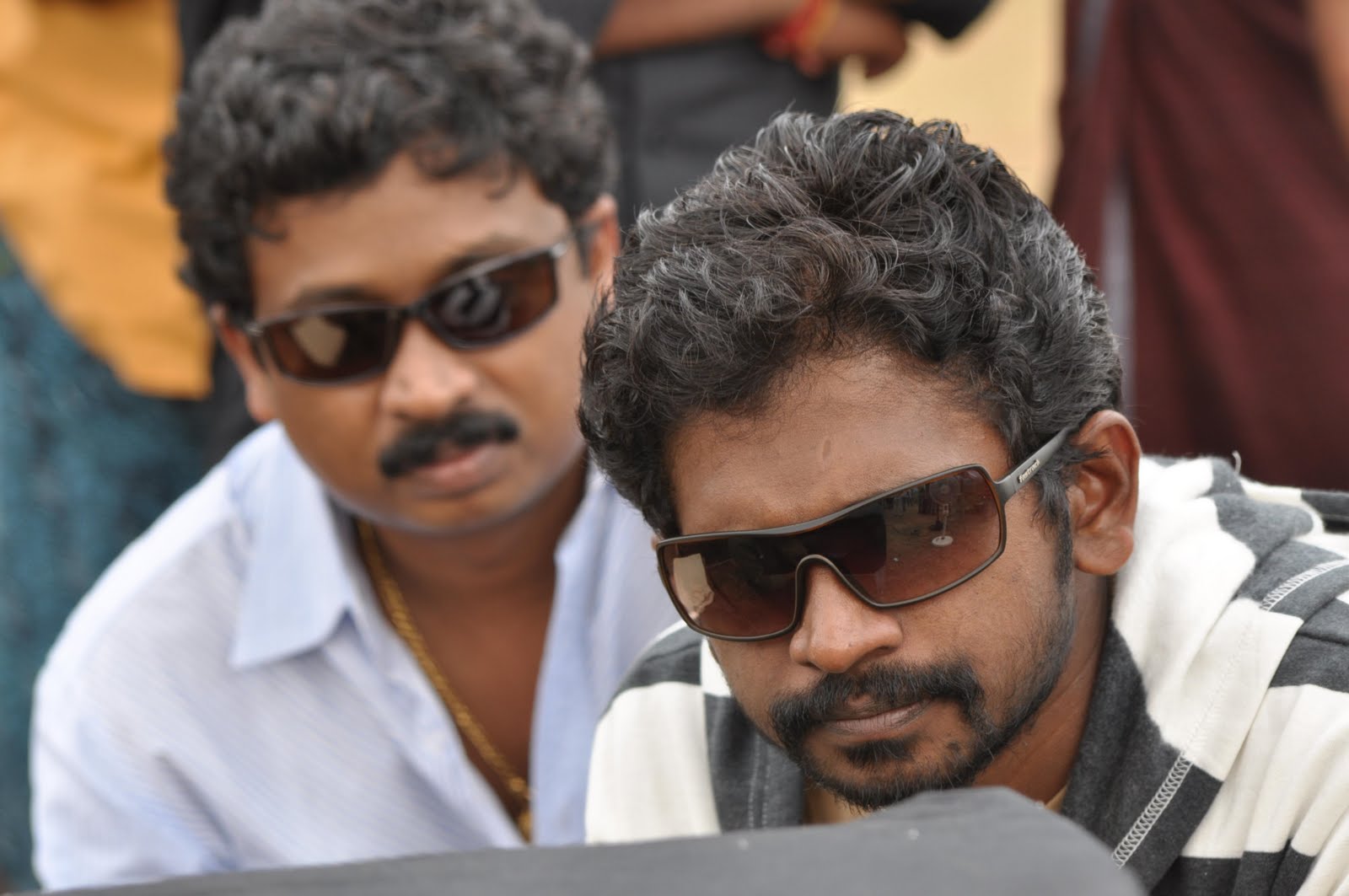
Director Mamas Chandran makes a competent debut with ‘Pappy Appacha’

By Shevlin Sebastian

In 2004, film director MeCartin gave a class on animation for a group of people in Thalassery, Kannur. Mamas Chandran was one of the students. When the class was over, he told MeCartin he wanted to join films. “I had wanted to be a director from my childhood,” he says.

MeCartin says that he was very impressed by the talent shown by Mamas during the class. “A skill in animation could be easily transferred to films,” he says. So when MeCartin was making a film, ‘Pandippada’, he invited Mamas to be an assistant director.

Mamas did his job well, and went on to assist in films like ‘The Speed Track’ by Jayasurya and ‘Balram Vs Taradas’ by veteran director I.V. Sasi in 2006.

In between, Mamas also made advertising films, and music videos, as well as numerous cartoons for Malayalam newspapers like ‘Rashtriya Deepika’,

Thereafter, in 2008, Mamas sat down and wrote a script. After a month, he showed it to Anoop, superstar Dileep’s sibling. Anoop liked it and asked his brother to read it. Dileep also liked the script, and the brothers decided to produce the film.

But Mamas had to wait two-and-a-half years before the shooting began. “Dileep had a lot of films in hand,” says Mamas. So he spent the time fine-tuning all aspects of the film.

On April 14, ‘Pappy Appacha’ was finally released. It is the story of a father and son, played with aplomb by Innocent and Dileep, who are arrogant landlords in a village called Ithirikkandam. They have quite a few businesses, including a market, a match factory, a school, and a theatre.

When Mamas, the son of a police officer, was growing up in Idukki, he came across a news report about a theatre that had caught fire. Later, it became a local controversy because the owners burnt it down to get the insurance money.

So Mamas wrote about how Dileep and Innocent burned down a match factory to get the insurance. Nevertheless, it is the usual story of landlords dominating a village and engaged in warding off fierce rivals.

In between, there are fights, a few songs, touches of comedy here and there, and a coy love story. Kavya Madhavan -- Dileep’s object of affection -- plays Annie, a schoolteacher who works in a school owned by the landlord.

Although MeCartin has not seen the film, he says the feedback he got from colleagues is that it is “so-so.”

Deepak Isaac, a Bangalore-based professional on holiday in Kochi says that the film was slow at certain places.

“There is nothing new in the story,” he says. “However, the best part was the introductory credits shown in animation style with comical descriptions of jobs like editing and directing.”

‘Pappy Appacha’ has done okay at the box office. And it is remarkable that Mamas, 28, and barely five years in the industry has been able to make a competent film.

Mecartin feels Mamas will become better. “The first film is always a learning experience,” he says. “Even the first one I made had so many mistakes. But by carefully avoiding the errors, the next film will become much better. I am sure this will be the case with Mamas.”

At his sister’s home in Thammanam, Kochi, where he stays, Mamas displays an outward modesty, but there are traces of braggadocio in his talk. Asked whether the presence of seasoned professionals like Dileep and Kavya made him nervous, he says, “An actor is a tool in the hands of a director. To mould them is my job.”

Mamas was also certain that the film would do well. “I was confident about the subject matter,” he says. “I knew there was a chemistry between Dileep and Kavya, as well as Innocent. I was sure that the comedy sequences would be funny.”

Clearly, Mamas does not suffer from any self-doubts. It is probably this conceit that has helped him make a debut where people in the industry have sat up and took notice.

At present, Mamas is busy writing another script. A new producer has promised to bankroll it. The future looks as bright as the sunny April morning that I met him.

(The New Indian Express, Kochi)


Newer Posts Older Posts Home