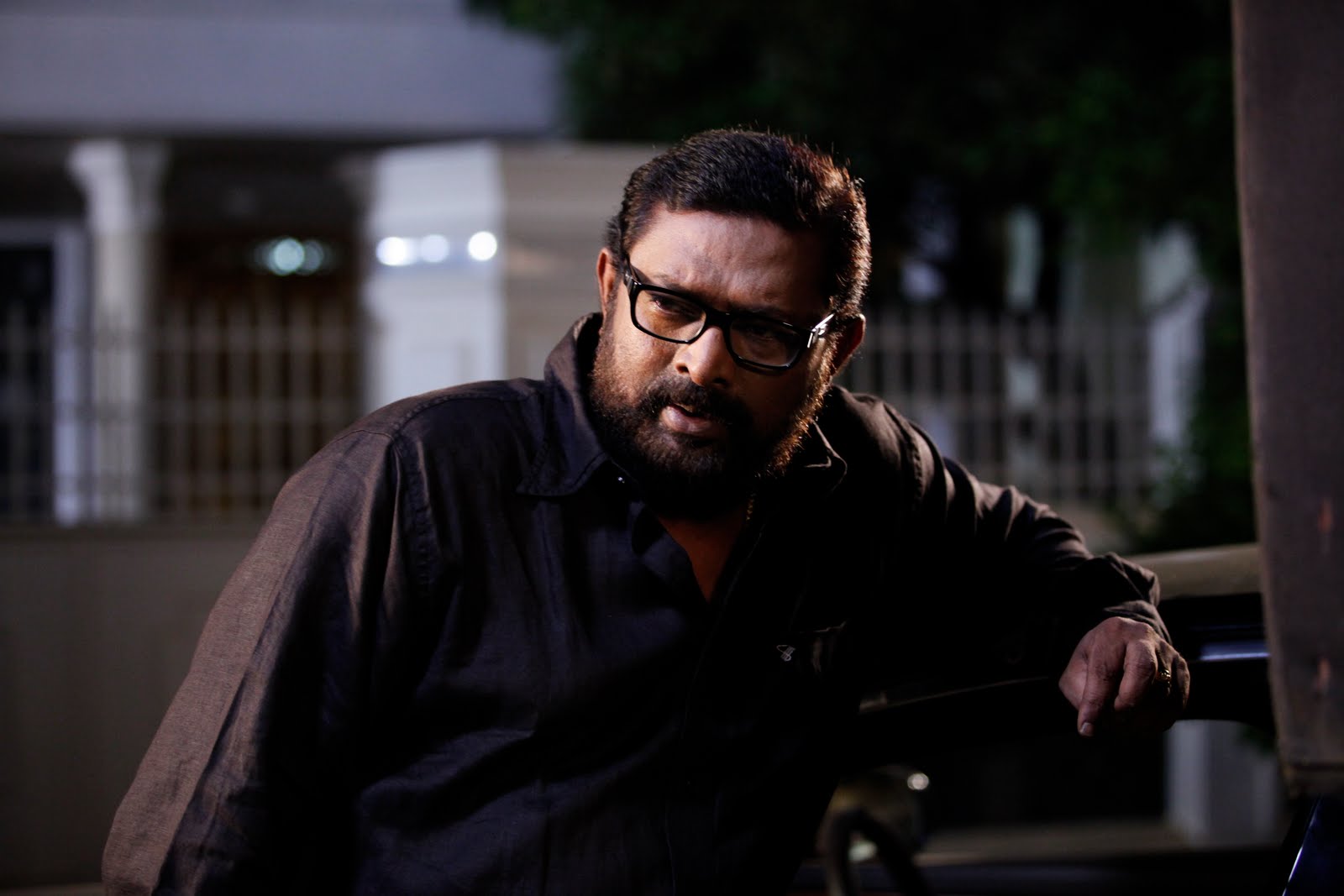
Ace crime reporter J. Dey was allegedly shot dead by underworld assailants in Mumbai. It has sent tremors of shock, outrage, and fear through the media community.
Dey was an authority of the crime world in Mumbai. He knew everything there was to know about the gangs. Who betrayed whom? Who had become friends once again? What was Dawood Ibrahim's future plans? What was Chhotta Rajan doing? Was Arun Gawli finished? He knew the cops who were compromised. He knew the law enforcers who were honest. Any conversation with him was a scintillating one, as he had so many interesting stories to tell – the dirt under the glitter of most of the prominent people in the city.
Dey was over 6' tall. His height was the first thing that one noticed about him. He was working in the Hindustan Times, Mumbai.
The inaugural edition, on July 14, 2005, began with a bang, with the telephonic transcripts of actor Salman Khan raging against Aishwarya Rai, when their relationship was breaking up. Salman's voice was slurred, but menacing at the same time, while Aishwarya sounded scared and frantic. It was an exclusive scoop by Dey.
One day, he said, “I am writing a book on the underworld. Rupa Publishers have been after me to do one. I am finding it difficult to get the time.”
Of course, Dey would find it difficult to find the time. Because, like a dedicated reporter, he was always scouring for news. He was constantly meeting up with criminals, pimps, sidekicks, and law enforcement people.
He was always having tea and vada pav in some restaurant or the other, trying to glean the latest information. And nearly every day, there would be a by-lined article by him on some aspect of crime or the other. It was no wonder he was called the father of crime reporting in Mumbai. Later, he moved from The Hindustan Times and joined MidDay as their crime editor when he was killed.
Incidentally, the book on crime did get written. It was called, 'Zero Dial: The Dangerous World of Informers' and is considered as a Bible on the underworld.
J. Dey, one of the great crime reporters. Rest in peace.
In February, I met Mammooty and we decided to work together. We spoke about several possible story ideas and we decided on one. I started writing the screenplay on March 20. The film is called ‘Kobra’. It is the story of two friends who are as close as brothers. Kobra is a short form of Kottayam Brothers. It is a study of power and humour.
For one month, I worked hard to write the first draft. During this time, I fell sick once. This happened when I became stuck during the writing and was unable to move forward. I became restless. I would be sitting in the living room at my home in Kochi. Then I would suddenly get up and go outside to the garden. Then I went to the kitchen to talk to my wife. I could sense a fever rising up in me. My breath was hot. I felt tired.
I knew that only my unconscious would help me in this situation. So, just before I drifted off to sleep one night, I thought about some of the nagging problems in the script. When I awakened the next morning, the solutions had presented themselves. The ever-reliable subconscious mind had done the work for me.
When I read the screenplay by myself, I feel it was a great one. But the moment I read it aloud in front of others -- my associates, friends, and relatives -- I knew instinctively where the weak parts were. I could see it from the facial expressions and the body language of the people who were listening. But when I asked them whether they were bored or if the pace was flagging, they would reply immediately, “It is fine. It sounds good.” They thought that since I have directed so many hits, they should not judge my work at all. They felt I would know how to make a successful film.
The shooting will start in the first week of September. So I will have to finish the screenplay by August 31. I am sure I will be carrying on making changes till the last day.
As I work on the script, I am also organising the sound recordings, scouting for locations, thinking and planning about the costumes, having crew meetings, and getting the lyrics written.
Very soon, I will be meeting Mammooty to read out the screenplay to him. I am sure he will suggest some changes. Then we will decide on who will play the various roles.
There is always a fear of failure inside me. It is this fear that motivates me to work hard. We must never take the audience for granted. You must put in 120 per cent. Only then will the viewers appreciate the film.
(Lal, one of Kerala's most successful directors, had several hits like 'Ramji Rao Speaking', 'In Harihar Nagar', 'Godfather' and 'Vietnam Colony', when he teamed up with Sidique. On his own, he had hits like '2 Harihar Nagar' and 'In Ghost House Inn'. )
(The New Indian Express, Chennai, Delhi and Kerala)
Says Nischal Chandra about his divorce from actress Kavya Madhavan
By Shevlin Sebastian
It was 5 p.m. on May 29 when Nischal Chandra emerged from the family court in Kochi after his marriage to actress Kavya Madhavan was annulled. Some people shook his hand and said, “Congratulations, we are really happy to know that you are a free man.” For Nischal it was a rare moment of happiness. “A few people have finally understood that there is another side to the story of what happened between me and Kavya,” he says.
Ever since Kavya returned from Kuwait, in June, 2009, after barely staying for three months with Nischal, citing spousal abuse, it has been a trial by media for Nischal. “All sorts of lies and distortions have been said,” he says. One example: repeatedly, it was stated that Nischal was uneducated.
“I was really surprised by this,” he says. In fact, Nischal has two master's degrees: one in telecommunication engineering from the Stevens Institute of Technology in New Jersey, and the other in management science from Stanford University, California.
Nischal has worked in top investment firms like Lehman Brothers, JP Morgan, and Merrill Lynch in New York. “For the last six years, I have been the Technology Adviser of a leading bank in Kuwait,” he says.
When this erroneous information was being published and broadcast, there were few journalists who were willing to listen to Nischal's version. “As far as I know, there were no clarifications,” he says. “Even today, people suspect that I am jobless and lack educational qualifications.”
He says the visual media has a stake in the entertainment industry, so it was tough for them to take a stance opposing Kavya. “Because I am a non-celebrity, they were not interested in me,” he says.
Nischal says he is unable to talk about why the marriage broke down because of a legal agreement with his former spouse. “But I can tell you about the impact of Section 498 A, the domestic violence act,” he says. Kavya had filed a case under this act, whereupon a husband can be arrested, without a warrant, and put into jail.
The law goes like this: 'Whoever, being the husband or the relative of a woman, subjects such woman to cruelty shall be punished with imprisonment for a term which may extend to three years and shall be liable to a fine. The offence is cognizable, non-compoundable and non-bailable.'
Nischal was ready for a long drawn-out court battle with Kavya, but his lawyer said that under Section 498A, the entire family could be charged, including his elderly parents, and would consume a lot of time. So he opted for a mutual compromise.
He admits that his family, which includes an elder brother, his wife and child, went through a harrowing time. “It was a nightmare,” he says. “Thank God it is over.” But there was a final sting.
A day after the divorce came through a vernacular newspaper reported that Nischal had refused to return gold jewellery worth Rs 97 lakh. Through his lawyer, Nischal had to issue yet another clarification stating that no dowry or gold jewellery had been taken from Kavya. Thankfully, the newspaper published a retraction.
As to the lesson he has learned from this bitter experience, Nischal says, “Family is the most important institution for a man. When members come together and support you at a most crucial time, you don't need anything more. This experience has made us stronger and more loving towards each other.”
Anthony Manickam has been serving tea and coffee to customers in offices and shops in Kochi for the past 30 years. In the process, he has been able to build a house and give a good education to his daughters
By Shevlin Sebastian
Antony Manickam, 59, arrives at the Sub-Registrar's office at Edapally on a red M80 moped. In a smooth movement, he takes out a tray and places paper cups on it. Thereafter, through a tap in the steel container tied at the back, he fills the cups with milk and adds tea powder or coffee. Then he walks inside and places cups on different tables.
The employees smile at him, some with relief, because they were yearning for their first refreshment of the morning. Then Manickam steps outside and goes to some shops on the opposite side. This includes a tailoring shop, a photocopying centre and a workshop.
Thereafter, he goes to the Edapally branch of the HDFC bank near Changampuzha Park. Again, he goes through the same motions and serves coffee to the 15 employees inside. “They like my coffee because I use Bru Instant,” he says. Incidentally, he charges Rs 5 for both tea and coffee.
Every morning, Manickam provides the beverages in several offices, stationary, and ration shops, workshops, and markets. “I serve 250 cups a day,” he says. “When I was younger, I would make a thousand cups, but now I have slowed down.”
Manickam has been doing this job for the past 33 years and has regular customers. One of them is Georfin Pettah, the owner of several supermarkets under the name of 'Jose Pettah and sons'.
“Manickam has been serving tea to us for the past three decades,” says Georfin. “There are many reasons for his success. First of all, he is dressed very well. Secondly, he serves the tea on a tray and it is very hygienic. The tea and coffee are always fresh.”
There is a reason behind the good quality. “I don't make the tea or coffee beforehand because it will have a stale taste after one hour,” he says. Since there are some places where he reaches two hours after he sets out from his home, he ensures that he makes it fresh each time he has to serve a customer.
On weekends, Manickam gets orders to provide refreshments for functions, baptisms, weddings and funerals. "He is very reliable," says Georfin. "You just have to give the order and forget about it."
Manickam, who is originally from Coimbatore, came to this business through misfortune. He had been working in the Sealord hotel as a waiter. But a year-long strike in the hotel in 1978 forced him to leave. He started a wayside hotel but it failed. He was in a penurious condition.
“I was finding it difficult to pay the rent and to buy the milk for my two-year-old daughter,” he says. In desperation, he began selling tea at night on the streets. Thanks to Georfin's cousin, Jose, he got his first assignment to give tea to the students of the Teacher's Training Course at the Edapally government high school.
Thanks to his sincerity, he got a lot of customers. In 1982, he bought five cents of land in Edapally and built a house. “I got a loan of Rs 1 lakh from the Edapally branch of the State Bank of Travancore, and repaid it by giving tea,” he says. He bought the cement, the sand, and the other building materials in a similar manner.
“The only time I had to actually pay money was to the labourers,” he says. “Can you believe that I was also able to marry off my two daughters, Mary and Maggie, apart from giving them a good education just by selling tea and coffee?”
Asked how long he would continue, Manickham says, "As long as my health permits. I just love this job and enjoy the look of expectation that comes on people's faces when they see me."
Thupten Yamphel talks about how he yearns to go to Tibet, a country he has never seen, and his experiences in Kerala
By Shevlin Sebastian
At 6.30 a.m., Thupten Yamphel opens his shop on Mullassery Canal Road in Kochi. His five employees have already arrived. They take out the merchandise from the boxes -- the imported leather shoes, sandals, and sneakers -- cleans them with feather dusters, and places them neatly on racks. The prices range from Rs 200 to Rs 1200. By 7 a.m., the first customer drifts in.
The unusual thing about Thupten, 31, dressed casually in a T-shirt and jeans, is that he is a Tibetan exile. Twenty-five years ago, his grandfather came to Kochi from the Tibetan enclave of Bylakuppe in Mysore and started the shop. Later, his father took over.
Meanwhile, Thupten studied till Class 5 in a Tibetan school in Bylakuppe and moved to the Breeks Memorial Anglo-Indian school in Ooty. During the summer vacations, he would come home to Kochi.
It was during these holidays that his grandfather, Tsering Thargyal, would talk about Tibet. “He said that it was so peaceful in Tibet,” says Thupten. “Nobody worried about tomorrow. They lived for today. They were very happy. He spoke about the beauty of Tibet: the mountains, the blue skies, and the cool weather. Sadly, I have only seen Tibet in videos.”
Thargyal found life in Kochi quite different. “My grandfather said that in Kochi everybody wants to make money,” says Thupten. “It is so competitive. Once that aim is fixed in the mind, many people do things which are not right.”
Unusually, his parents did not talk much about Tibet, but there was a reason for this. They left Lhasa for India when they were only three years old. “They have no memory of the place,” says Thupten. Here’s a brief recap of Tibet’s history: China annexed the country in 1951 and 2 lakh Tibetans have gone into exile ever since.
After he completed his Class 12, Thupten came to Kochi and did his B.Com from Sacred Heart College in Thevara. Thereafter, after a year's course in interior design, he went to Bangalore and joined a call centre.
It was there that he met Rievine, a Christian girl from the town of Senapati in Nagaland. After a courtship of two years, they got married on December 25, 2007, settled in Kochi, and now have a three-year-old son, Tenzin.
“I came back to Kochi because my father was unwell and I decided to look after the shop,” says Thupten. Subsequently, his father moved to Bylakuppe.
In Kochi, the people have been friendly and kind. “They respect ladies and children,” he says. “If I am traveling on a bus with my family, a man might get up and give his seat to my wife. In Mysore, they will make us stand and the conductor will double-check to see whether I have taken a full ticket for my son, even though he is an infant.”
However, there is one drawback about living in Kochi. “The weather is too humid,” he says. “So, I welcome the monsoon rains even though my business goes down.” The best time for the trade is during the festivals of Onam, Ramzan, and Christmas.
At his home, Thupten retains some links with Tibet. There are several photos of the Dalai Lama. “He is our God,” he says. “I pray to him every morning.” Sometimes, on weekends, Rievine cooks Tibetan dishes. So they have momos (dumplings), Thupka, a noodle soup, which is served with meat, and Tingmo, a steamed bread.
When son Tenzin grows older, Thupten plans to take him to Bylakuppe, so that he can be taught the Tibetan language, culture, and religious traditions. “It is very important that he knows who we are,” says Thupten.
And, despite his comfort in living in Kochi, the moment Tibet becomes free he will go back. “After all, everybody likes to stay in their own country,” says Thupten, with a smile.
A Bus Day programme by Transport Minister V.S. Sivakumar and others highlight the need to travel in public transport to ease traffic congestion and pollution in Kochi
By Shevlin Sebastian
“I hope you had bought tickets,” says P. Rangadasa Prabhu, the president of the Ernakulam District Residents Association Apex Council, to a group of women councillors of the Cochin Corporation, as they step down from a private bus at Thoppumpady.
“Of course, we have,” says Councillor Soumini Jain, while her colleagues, Essy Joseph and Retnamma Raju, nod their heads. On the sidewalk, magician K.N. Kutty puts on a red bow-tie, a black waist-coast over a striped red and black shirt, and a top hat on his head. “I plan to show some tricks on the bus,” he says.
They had all gathered to take part in the 'Bus Day' programme, organised jointly by the Indian Chamber of Commerce and Industry, the Center for Public Policy Research, FM Red, and Uninor.
A few minutes later, at 8.15 a.m., State Transport Minister V.S. Sivakumar gets into a low-floor air-conditioned bus. Behind him, there is a huge crush of people, including policemen, legislators, councillors, mediamen and workers of political parties. A wag says, “This is the first time that a low-floor a/c bus is so crowded.”
The bus goes all the way to the Fort Kochi bus stand, but poor Kutty is unable to perform his magic in the crush. At the public function, P. Prathap Chandran, the president of the Indian Chamber, says, “About 70 per cent of those who use public transport take up 15 per cent of the public space. On the other hand, 15 per cent of private vehicles use up 70 per cent of the space. That is why we want more and more people to use public transport.”
As Sivakumar steps forward to speak, magician Kutty proffers a gas lighter. The minister proceeds to light the wick of a candle, which is turned, by magic, into a colourful hand fan by Kutty. So the magician finally gets his few seconds in the limelight.
Sivakumar smiles and says, “Every day, in a rapidly growing city like Kochi, more than 200 vehicles are being registered. This will lead to an enormous increase in traffic jams, apart from pollution levels. That is why we want to encourage bus travel.”
He acknowledges that bus journeys have to be made smooth and comfortable, in order to attract those who travel by cars. “Eight new Thiru Kochi buses will be introduced soon,” says the minister, to widespread applause.
MLA Dominic Presentation bemoans the fact that despite crores of rupees being spent, the Fort Kochi bus stand is not operational. “We need to make this work,” he says. Mayor Tony Chhamany promised that the stand would start functioning soon.
The others who spoke include former Transport Minister Jose Thettayil, who had come up with the 'bus day' concept during his tenure. And he practises what he preaches.
On the 'Safar' private bus from Fort Kochi to Aluva, following the function, Thettayil is a passenger, en route to his home in Angamaly.
From childhood all the way to marriage, there are many problems in life that seem insurmountable. What aggravates the situation is the rapid social changes that are taking place in Kerala
By Shevlin Sebastian
Photo: Dr. Varghese Pudussery
Dr. Varghese Pudussery, the director of the Kochi-based Santhwana Institute of Counselling and Psychotherapy rarely receives patients as young as three years of age. But this happened recently, when the parents told him that their child was not speaking.
“All babies have a socialisation process which is done through the mother,” he says. “In this case, the mother was depressed, and so there was no bonding between her and the child.”
If proper parenting does not take place, the problems with children continue. They can suffer from learning disability (LD) or dyslexia. “This can happen at any age,” he says. “It could be in kindergarten, in Class 3 or even in Class 9.”
Essentially, as the load in the curriculum increases, some children find it difficult to cope. What exacerbates the situation is the pressure imposed by parents.
“When parents place too much stress, there is a physical breakdown,” says Pudussery. “Children may suffer from headache, vomiting sensations, and stomach ache. Later, the teenager becomes depressed. They feel a tension, both in school and at home.”
Then a teenager will turn to things that will bring him pleasure, like sex, drugs, liquor, and the company of bad people. “In a gang, nobody asks about their studies,” says Pudussery. “Soon, they start drinking. By the time the parents realise what is happening, it is too late.”
Recently, a teenager, Roy George, was brought for counselling. The father worked in Dubai. The mother, who had fallen ill, had sent her son to stay in the boarding. “At that time the parents did not realise that he was suffering from a learning disability,” says Pudussery. “When a child has LD, individual attention should be given to help him cope with the studies.”
This was not available in the boarding. Roy began to do badly in class. In frustration, he joined some bad elements among the boarders and began drinking, smoking and stealing. Now the father has given up his job and returned because of the son.
In college, youngsters face other problems. Nearly all of them, boys and girls, have love affairs. “There are infatuations and crushes,” says Pudussery. “Some get rejected, and become depressed. This happens to both sexes. Girls have additional traumas like unwanted pregnancies.”
One reason for their promiscuous behaviour is the pervasive influence of the media. “Pre- and extra-marital incidents are shown often on TV,” says Pudussery. “Online pornography has a great impact on the youngsters.”
So what is the way forward for parents? “They should maintain lines of communication with their children from young,” says Pudussery. “Usually, both parents are working and do not have the time.”
Parents and their children are living on the surface level. Once the progeny become teenagers they do not want to talk to their parents. Because when they were children, the parents did not listen or play with them.
“Parents find it silly when the son or the daughter wants to talk about dragonflies,” says Pudussery. “So the children feel discouraged. Then they stop talking. When parents want to converse, it is too late. You have to start conversing and listening to your children from very young.”
Meanwhile, middle-aged parents are themselves in a rocky terrain. “A lot of married women suffer from frigidity,” says Pudussery. “In Kerala, after two children, a woman loses interest in sex. In fact, they have an abhorrence for it.”
One reason is that there are constant quarrels with the husband and because he drinks too much. “Women are afraid to walk out of the marriage because of social stigma,” he says. “So even though they dislike their husband, they will continue to live with him.”
But the public will not know that there is anything wrong in the marriage. The couple lives together and goes out for functions, both smiling happily. When friends and relatives come home, the husband and wife will talk to each other. “But as soon as they are alone, they become aloof and cold towards each other,” says Pudussery.
The complaint of the wives is that their husbands do not care about them or show any interest in them as persons. “My husband only comes to me for sex,” says Rekha Nair, a 38-year-old housewife. “I am not that interested in it. I can have sex once or twice a week, not every day.”
Pudussery puts this lack of interest to religion. “In most religions, sex has a negative connotation,” he says. “It is regarded like a sin if you enjoy it. This has gone deep into the subconscious of a woman. Hence, their inability to gain pleasure from it.”
As the society in Kerala changes, at a dizzying speed, more and more people are going to have a traumatic time, on the professional, the social, the home, and the parental fronts.
Interior designers Benny and Lucy Zachariah make luxurious houseboats, which ply in the scenic backwaters of Kerala's Alleppey district
By Shevlin Sebastian
From the outside, the ‘Rajdhani’ looks like any other houseboat in Alleppey. But when you step inside, you will draw your breath in surprise. The wooden floor is honey brown in colour and is gleaming.
“We have imported Merbau wood from Brazil,” says interior designer Benny Zachariah. “Merbau lasts a long time and is a strong wood.” The 450 sq. ft. living room has a bar, with a curved top at one end. Liquor bottles are placed on a glass shelf behind it. Below the bar, there is space for a mini fridge.
At the centre, there are four armchairs placed around a table. “The table is made of teak and has intricate designs,” says Benny. “These have been custom-made.”
The ceiling has a teakwood veneer and several brass buttons pasted all over. The lights, bunched together, to give the impression it is a chandelier, has been imported from Kuwait. At one end of the living room, it opens out onto a sun deck.
“Foreigners like to strip down to their bikinis and do some sunbathing, especially those who come from cold countries like England and Norway,” says Benny.
The houseboat has a length of 105 feet and a width of 17 feet. “Most houseboats have a width of 14 feet,” says Benny, who has designed eight of them. The height is 9 ft, two feet more than the norm. And so, the ‘Rajdhani’ is one of the largest boats plying on the backwaters of Alleppey.
In order to get more space, Benny did some innovations. “Usually the hull tapers from the centre to the tip,” he says. “But for this particular boat, I made the sides run parallel, like in an Airbus plane, till it suddenly meets at the tip.”
There are two bedrooms, of 150 sq. feet each, with attached bathrooms. The bedrooms are luxurious, with Victorian style beds, wood panelling all over, and a writing table at one side, with a LCD TV at the other end. Interestingly, despite it being air-conditioned, a fan has been mounted on the wall.
“Many foreigners are tired of air-conditioning, and prefer natural breezes,” says Benny’s wife Lucy, an interior designer, who assists him. “So they open the windows and switch on the fan.”
The door of the bedroom is in the Kerala tharavad style with a brass latch made of an intricate design, which is known as a Manichithrathazhu.
At the end of the boat is a kitchen with modern appliances like a hob and a hood. There are several cabinets, and a granite kitchen top. “Sometimes, foreigners prefer to do the cooking themselves,” says Lucy. “At other times, there is a cook who makes Kerala-style dishes.”
Incidentally, the boat is owned by Thomas Chandy, an MLA. “My brief to Benny was to make a boat that looked like the inside of a five-star hotel, and he has succeeded in doing that,” says Thomas. “Many of my guests have shown their appreciation.”
His visitors include members of the royal family in Kuwait, where Thomas runs several schools, Saudi princes, and many state ministers. “In fact, former Australian cricketer Matthew Hayden spent a night, and expressed his delight,” says Benny.
Since Thomas also owns the high-end Lake Palace resort, at Alleppey, which is also designed by Benny, residents can hire the boat at Rs 25,000 for a night.
For those who have not been on a houseboat plying in the tranquil waters of Alleppey, this is an once-in-a-lifetime experience.
(The New Indian Express, Chennai, Delhi and Kerala)
Lower back pain is the most common ailment among the middle-aged across all classes of people. Timely precautions can enable one to avoid debilitating pain
By Shevlin Sebastian
Dr Jacob Kani, a senior journalist based in Delhi, is lying on his back at the Kumar International Specialty Centre for back and neck pain at Thammanam, Kochi. Above his head is a television set where a Malayalam film song is being shown. Suitably distracted, he is not aware that a disk in his spine is being pulled, with the help of the 'DaVinci X10', a decompression system, worth Rs 55 lakh. Two things happen when the disc is pulled.
“A negative pressure is created,” says back pain specialist Dr. Sasikumar. “This will help the disc to recede into the spine.” When that happens water fills up inside the disc. This is possible since the spine is surrounded by body fluids. One immediate result: the cushioning effect in the disc will become better.
Meanwhile, there is a smile on Jacob's face. “I feel much better,” he says. “This is my fourth visit to the centre. Whenever I come to Kerala, I undergo a treatment because I have a chronic back problem.”
On another bed is a nun, Sr. Arpita, who stays in Bhagalpur in Bihar. She is on her annual visit to her parents' home in Kochi and is being treated for lower back pain.
So what exactly is a lower back pain? There are 24 pairs of moving vertebrae in the spine. Between each of them, there is a disc, which acts as a shock absorber. This disc has two parts.
“There is a fluid inside which is encased in a hard, outer covering,” says Sasikumar. “When the fluid oozes out, it touches the nerves. This causes a radiating pain, which starts from the back to the legs and from the neck to the fingers of the hands.”
Lower back pain is the most common complaint among the middle aged, and it cuts across all classes of people. “You will be surprised to know that many headload workers come for treatment,” says Sasikumar. “The problem is that they rarely use the right technique to lift things.”
To lift heavy objects, the ideal way is to do it close to your body. “If it is a sack of cement, most workers lean forward and try to lift it, a couple of feet away from where they are standing,” says the doctor. “That is when the lower back is subjected to a lot of pressure. Sometimes, the discs, as well as the spine, are injured.”
People who work in the IT industry also have perennial back problems. “IT workers sit on the edge of a chair for hours together,” says Sasikumar. “Instead, they should sit with their back resting at the base of the chair. When you sit at a 100 degree angle, there is the least amount of strain.”
Another reason for back pain is stress. “There is a lot of anxiety in the workplace and at home,” he says. “All your muscles are under tension and there is a possibility of spasms taking place.”
Meanwhile, at the specialty centre, various methods like electrical stimulation, laser rays, acu-pressure massage, application of heat, and prolotherapy injections are used to relieve the pain. “The treatment is surgery-free,” says the specialist.
As for preventive measures, Sasikumar suggests a protein-rich diet. “Avoid sweets and fried foods as they produce only carbohydrates,” he says. “This increases the size of the tummy and puts a strain on the spine.” He also suggests regular exercises and a straight posture while standing or sitting.
In many villages of Kasaragod district, in Kerala, there are numerous children and adults who have been afflicted by life-destroying diseases like cerebral palsy and blood cancer. Locals say that this is the result of the spraying of the endosulfan chemical in the cashew plantations in the area
By Shevlin Sebastian
Photo: Abhilash, 12, is suffering from hydrocephalus (swollen head)
The mud road is rutted. But the driver of the jeep, Ravindra Rai, goes over the humps and crevices with a practiced ease. On either side, there are numerous trees: coconut, banana, cocoa, mango, jackfruit, guava and cashew. A soothing summer breeze is blowing, accompanied by the 'crick-crick' sound of crickets.
The house in Vani Nagar has a red tiled roof. Near the entrance, there is a baby calf, a rope tied around its neck, chewing on green leaves. It is so all pleasant till we see Harshith sitting on a wheelchair in the veranda. He is 18, but looks 12. His legs are pencil-thin. His head hangs loosely over his chest, while spittle is seen at the corner of his mouth. Sometimes, Harshith sticks out his tongue, as he stares blankly into space.
“He was born like this,” says his mother, Jayanthi. Harshith has cerebral palsy. “The medicines are very costly,” she says. “My husband works as a labourer in the cashew plantations. We are in financial difficulty.” But there is a ray of sunshine in this darkness: Harshith's younger sister, Chitra, 12, stands nearby. She is in blooming, perfect health.
In a nearby home, there is Ashika, 10. She has shoulder-length black hair and a sweet smile, but her mother, Kusuma, is holding her in a tight, but warm embrace. The reason is because Ashika is trembling uncontrollably.
“She suffers constantly from epileptic fits,” says Kusuma. “This has happened ever since she was born. I have taken her to many hospitals, but there has been no improvement.” She is a teacher, while her husband works in a hotel in Mangalore.
In the Buds school at Perla, there are 27 students: 12 boys and 15 girls. On a straw mat lies seven-year-old Ayesh, who suffers from cerebral palsy. The most striking feature is the way his eyeballs roll from side to side.
It seems he is unable to control its movement. His mother, Hemlata, says simply, “He is blind. Operations have been done to try to restore the sight, but it has not worked.” On a nearby bench sits Padmaraj, who is 18. He has a paralysed lower body, “but his brain is fine,” says the teacher Mariam Jyothi.
All the students are in varying stages of deformity. “They suffer from mental retardation, epilepsy, asthma, psychiatric problems, and different types of cancers,” says Mariam. There are no classes in the school. Instead, Mariam teaches songs and the students play games. But some of the children have done drawings also.
On small strips of white paper, they have drawn houses and ponds, trees and plants. It has been put up on a board in the dining room.
Meanwhile, Avimash, 25, of Padra village, is also mentally challenged. “He suffers from occasional fits also,” says Dr. Y.S. Mohan Kumar, a physician who has been practicing in the area for the past 29 years. Recently, a self-help group, Solidarity Youth Movement arranged for surgery on his knee joints. “He is able walk a little,” says Kumar.
Then there is Abhilash, 12, of Karabka village who is suffering from hydrocephalus (swollen head). “From birth he has been like this,” says Dr. Kumar. “He is mentally challenged and is unable to do anything.”
There are so many victims like this in the various villages of Kasaragod district of Kerala. Asked the reason why, the villagers, most of whom are illiterate, say one English word with repeated emphasis: endosulfan.
Here is the history. The government-owned Plantation Corporation of Kerala (PCK) owns 4696 hectares of cashew plantations spread over 20 villages. From 1976 onwards, the PCK employed aerial spraying of the chemical, endosulfan, to combat the tea mosquito which was damaging the cashew tree.
Unfortunately, within a few years, health problems were reported among the villagers. “I was alarmed by the rise of psychiatric and neurological problems,” says Mohan Kumar. “Several people had congenital abnormalities, mental and physical retardation, and cancers. These cases were very high in number. I realised that there was something abnormal about this.”
When the local farmers staged a protest because numerous honey colonies were destroyed following the aerial spraying that Mohan Kumar and his friend, the journalist Sreepadre realized that the health complaints could be caused by the spraying of endosulfan.
Sreepadre did research and discovered that in the World Health Organisation literature on endosulfan, it is stated clearly that there are health hazards in exposure to the chemical. People can suffer from neurological problems and all forms of cancer. Endosulfan can enter the human body through water or the food chain.
Sreepadre published an article in a Kannada newspaper. It provoked public interest in the issue. Incidentally, the U.S. Environmental Protection Agency classifies endosulfan as a highly hazardous pesticide. Later, research by the National Institute of Occupational Health confirmed high levels of endosulfan in the people, water, soil, and vegetation at Kasaragod.
In 1998, following the filing of a suit by M.K. Leelakumari Amma, a government employee, whose brother died because of the possible effects of endosulfan, the High Court banned the aerial spraying of the chemical in Kasaragod, as well as the entire state. The PCK stopped aerial spraying on December 26, 2000.
Meanwhile, till now, there have been 16 government-sponsored studies. Some are by well-known organizations like the Indian Council of Medical Research. But the conclusions have been mixed. While several have stated that endosulfan is the cause, others have said that there is no connection.
“We suspect that those who say there is no link are in the pay of the pesticide companies,” says Narayanan Periya, the chairman of the Endosulphan Viruddha Samaran Samiti (The Committee against endosulfan), an umbrella organization of several groups which are fighting for the cause of the victims.
Narayanan is happy with the recent Stockholm Convention of Persistent Organic Pollutants which has agreed to a worldwide ban of endosulfan by 2012, although India has asked for a grace period of 11 years to enforce it.
Says Narayanan: “I have to be cynical here. This period of 11 years was sought by India to enable the pesticide companies to get rid of their stocks. Meanwhile, more lives are going to be damaged.” And deaths are also taking place (see box).
And there is social damage. “Young girls are unable to get married,” says T.C. Madhava Panicker, president of the Kasaragod People’s Forum. “People are scared that when these girls get pregnant, they might have children with congenital defects.” As media coverage causes fear and alarm, divorces are also on the increase.
“There is a case of a wife who did not explain why she was having fits,” says Panicker. “But when the husband read about the endosulfan issue in the newspapers, he had no qualms about filing for divorce.” Nowadays, when wives get pregnant in Kasaragod, husbands insist on numerous scans. “If there is a slight trace of abnormality in the foetus, they will immediately go for an abortion,” says Panicker.
It is a benighted area. House after house reveals an endless cycle of tragedy. On our way back, driver Ravindra suddenly stops near a cashew tree by the side of the road. He shakes the branches and several cashew fruits fall to the ground. He picks up one and sucks the juice and eats it heartily. Then he gives us a couple. But, numbed by the human devastation we have just witnessed, we are unable to summon up the carefree courage needed to bite into the succulent-looking fruit.
When the bell tolls
According to Madhav Nambiar, the coordinator of the Endosulfan Victims Relief and Remediation cell, at Kasaragod, till 2008, 486 people have died. In 2006, Chief Minister V.S. Achuthanandan gave Rs 50,000 to the relatives of 133 people. Till 2008, the kin of another 45 people received the same amount.
So who are the people who died?
Santosh, 15, is the son of Chukra Padre. He died of Non-Hodgkins lymphoma. His house is a few metres away from the cashew plantation. He drank the water that came from a pond that flows through the plantation. “You can get ill by drinking the water or through the food chain,” says Dr. Y.S. Mohan Kumar, a physician who works in the area. “He survived for one year after the diagnosis.”
Vasanth Kumar is the son of Kunhappa Naik, Vani Nagar. He had mental retardation and epilepsy from birth. He died at 18. A year later, his father died out of sorrow.
Chaniya Naik, 58, died of liver cancer. He was a labourer and left behind three children. .
Kumaran Master, a school teacher, was the spirit behind the endosulfan agitation. He was 58 when he died of liver cancer. He had been to Mangalore, Bangalore, and Vellore for treatment. “He spent Rs 5 lakh in a bid to get cured,” says Kumar. The family received a compensation of Rs 50,000 from the state government.
Sheenappa Gowda, 55, died of esophageal cancer. He was a non-alcoholic, and did not smoke. “He also spent a lot of money for his treatment in Mangalore and Puttur,” says Dr. Kumar.
Govindan Naik, 32, died of leukaemia at the village of Padre .
Malinga Madival, 60, died of skin allergy problems. He was misdiagnosed, and eventually died of renal failure complications.
What is endosulfan?
Endosulfan is an organochlorine insecticide and acaricide. It has become controversial because of its acute toxicity. By 2011, more than 80 countries have banned it. However, it is still being used in India and China. In fact, India is one of the largest consumers.
Today, endosulfan is regarded as one of the most toxic pesticides. It copies or heightens the effect of estrogens and can be an endocrine disruptor. It causes reproductive problems in both animals and humans. “Genetic mutation is the dreaded complication of endosulfan,” says local physician Dr. Y.S. Mohan Kumar. “It will be carried to the next generation. There are cases where the second generation has also been damaged.”
(The New Indian Express, Chennai, Delhi and Kerala)
The Kothamanglam taluk aims to eradicate domestic violence
By Shevlin Sebastian
At the open adalat conducted for victims of domestic violence by the Taluk Legal Service Committee at Kothamangalam, there were several people present. In the crowd, Dr. Lissy Jose, a social worker, noticed a 14-year old girl, Meena, (name changed) who was accompanied by her mother.
“I knew from Meena's body language that there was something wrong,” she says. At an opportune moment Lissy asked Meena, “What has happened?” In response, Meena burst into tears, and ran out of the hall.
The mother is a victim of domestic violence. “Her husband has a tremendous suspicion about her character,” says C.K. George, a lawyer, who is familiar with the case. “He throws her out of the house, and forces her to spend the night outside the door. Meena, an only child, seeing all this, has become traumatised.”
Realising that there are several such incidents, the leaders of three organisations -- the Taluk Legal Service Committee, Kothamangalam Bar Association (KBA), and Liss India, a social service group – stepped forward.
“All of us felt that when the harassed women entered the legal process, it takes a long time and there may be no solution to the danger of the family breaking up,” says T.J. Paul, KBA president.
On March 23, 2010, they set up the Domestic Violence Eradication Mission (DOVE). Through DOVE, they want to create an awareness that it is not right for a man to hit a woman. DOVE also provides legal support and counselling for distressed women. “We also conduct public adalats to solve disputes and grievances,” says Paul Varghese, KBA secretary.
This type of initiative became imperative because in Kothamangalam taluk, out of every 100 families, in more than 50 per cent there are instances of domestic violence. “I blame the rampant alcoholism among the men,” says Lissy. “Most of them are uneducated also. They take out their frustrations on the wife.”
The DOVE Mission project report had been sent to the National Legal Service Authority in New Delhi. The executive chairperson, Justice Altamas Kabir, commended it, and sanctioned Rs 5 lakh as financial assistance.
Meanwhile, there are plans by the legal service committee, under the chairmanship of Dinesh. M. PIllai, Judicial Magistrate, Kothamangalam, to start a ‘KUTTI-DOVE Mission’ to eradicate domestic violence among children.
“The aim of both these programmes is to have a domestic violence-free taluk,” says T.J Paul. “I know it is a difficult task.” To paraphrase what a leading Kerala politician once said, “Where there is a family, there will always be domestic violence.”
When the boats are late, on the ferry route between Ernakulam and the Vypeen islands, the lascars are at the receiving end of passengers' ire
By Shevlin Sebastian
Photo: (From left) Lascars M.K. Sulaiman and K.R. Rajan
M.K. Sulaiman, a helper (lascar) on the ferry between Ernakulam and the Vypeen Islands remembers his colleague, Ajayan, doing a rescue act. “A woman, in a bid to commit suicide, jumped off the boat,” says Sulaiman. “Ajayan immediately leapt from the boat and saved her.”
Usually, people fall when they are embarking or disembarking. “I throw a lifebuoy at them,” says Sulaiman. “But if the passenger finds it difficult to hold on to it, I will jump into the water.”
Sulaiman also jumps in for other reasons. Frequently, weeds and plastic packets get stuck in the propellers. It is the lascar’s job to remove it.
“We do not have any goggles or an oxygen cylinder,” says K.R. Rajan, another lascar. “We have been asking for this equipment for a long time.” So the lascar wears a white towel, takes a deep breath, and goes down. “The river is deep and, sometimes, we have to do this job at night,” says Rajan. “So, it is risky.”
However, recently, the state inland water transport department, which runs the ferry service, has started giving the lascars a ‘risk allowance’.
Indeed, the job is not easy, and the working hours are long. One shift begins at 1 p.m. and ends at 9.30 p.m. Thereafter, the lascars spend the night at the jetty. They sleep on cardboard packets or sacks, and begin work at 6 a.m. the next day. The shift lasts till 1 p.m. and then they go home. “It is, in essence, a 24 hour job,” says Rajan. Then they come to work the next day at 1 p.m.
The lascar’s job is to keep the boat clean and to tie and untie the rope around the pillars of the jetty when the boat arrives and leaves. It is a routine job, but, frequently, they are at the receiving end of the ire of passengers.
When the boat is late in arriving, the people will shout at the lascar. “Many passengers, especially from Fort Kochi, behave badly with us,” says Rajen. “Many are drunk or high on drugs.”
If there is an engine breakdown while travelling between the islands, the boat will float for a while before help comes. “This is another occasion when passengers get angry,” he says. “However, because of mobile phones, we can contact other boats and get help quickly.”
Another area of contention occurs when tickets are being issued. The moment one hundred tickets are sold, the counter is closed. This rule was implemented in the aftermath of the boat tragedy at Thekkady in 2009, when 45 tourists drowned when a boat capsized, because of overcrowding. But when the passengers are denied tickets, some of them have broken the grill of the counters, and the police have to be called. “That is part and parcel of our job,” says Sulaiman. “Whatever happens we have been told not to react.”
It is a sunny Thursday in February. Oommen Chandy is on one of his campaign stops at Kanjirapally during the Kerala Mochana Yatra. One by one, the leaders from the panchayat, zilla, and the state level step forward with garlands. Somebody places a shawl over his head. Another person gives a bouquet. A lady garlands him with ten rupee notes. The adulation is astonishing to see.
A couple of kilometres outside Kanjirapally, the car is stopped by a few people. A woman in a blue nightgown rushes up holding a green coconut with a white straw sticking out of it. “Very nice to see you, Sir,” she says.
In the village of Pinnakkanadu a group of schoolchildren, in blue uniforms, shout and whoop with joy, as they throw orange flower petals at him. A nun presents Chandy with a bouquet.
At Erattupetta, the reception is rapturous. Congress (M) leader K.M. Mani, splotches of red on his face, thanks to the afternoon heat, still has the energy to shout, “Oommen Chandy is going to change the face of Kerala.”
This is just a small glimpse of what Chandy’s life is like every day. But, somehow, the man has remained simple and humble, despite his constant dance with power and sycophancy and its corrupting effects on the soul. Yet, there is also no doubt that Chandy is shrewd and ambitious, because, otherwise, he would not be chief minister.
And it is also a day when Chandy is at his most candid. “One of the most poignant experiences of my life was when I went to Dubai ,” he says. “I was taken to the quarters where the Malayali construction workers stayed. And I was shocked. It was worse than the way our cows lived.”
Chandy pauses for a few moments and says, “I felt a tremendous guilt. I realized that it was our government policies, whether of the LDF or the UDF that forced these men to go and look for work in places like Dubai. We were not able to create enough jobs for our youth.”
It is a stunning admission by a politician, and, more so, for one who is such a seasoned handler of the media. But there is no doubting the sincerity in his voice.
He makes another interesting observation: “If you look at the talent and educational qualities of Malayalis our state should have been No. 1 in the IT industry. Instead, Karnataka has an IT industry worth Rs 76,000 crore, Tamil Nadu has Rs 40,000 crore, and Andhra Pradesh, Rs 30,000 crore, while in Kerala it is only Rs 2,360 crore. In all these states so many Malayalis are working in the IT industry. We have to ensure that this migration of talent stops.”
But, today, Chandy knows keenly that the path ahead to create jobs is going to be even more difficult because in the 140-member Assembly, the Communist-led LDF has 68 members in the opposition.
“The problem with the Marxists is that they are clinging on to an ideology which is impractical and out-dated in today’s fast-paced world,” says Chandy. “They always have a negative attitude towards changes. They were against computers and tractors when it was first introduced. That same outlook persists.”
His frustration overflows. “The Marxists will resist all moves to improve the investment climate when they are in the opposition, and when they come to power, they will not do anything at all,” he says. “Overall, it is a total loss for the state.”
Now, the people will have to wait and see whether the 21st chief minister of Kerala can convert this total loss into a total profit. If it is the latter, the youth will stay. Otherwise, the devastating exodus of talent to other states and countries will continue.